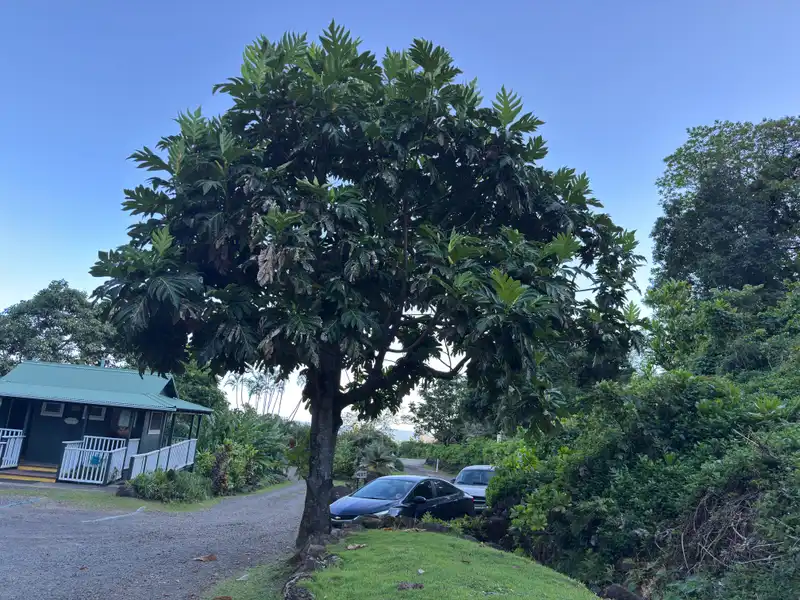
Breadfruit
Artocarpus altilis
A majestic tropical tree bearing versatile, starchy fruit and iconic lobed foliage.
- Plant Type
- House Plants & Tropicals
- Width
- 20 Ft.
- Height
- 40-80 Ft.
- USDA hardiness zone
- 11
- Sun requirements
- Full Sun
- Design image count
- 2
Design images (2)


Bring your vision to life
The design images above are drag-and-drop ready — place this plant on a photo of your own yard and see it before you plant it.
Create design onlineAbout Breadfruit
Breadfruit is a broadleaf evergreen tropical tree with a dense, spreading canopy and large, deeply lobed leaves. Its starchy fruits are harvested as a staple food and are usually cooked; the tree needs a warm, humid climate and room for its broad crown.
## Landscape use
Grow breadfruit outdoors only in tropical climates or in a protected warm structure where its temperature needs can be met. Oregon State University reports a mature height of roughly 40–50 feet, occasionally taller, and describes its dense, spreading canopy. [Oregon State University](https://landscapeplants.oregonstate.edu/plants/artocarpus-altilis)
## Siting and seasonal interest
Provide full sun to light shade and consistently moist soil. Breadfruit originated in the South Pacific and is now cultivated widely throughout tropical regions. Its green fruits become ready to cook as a starchy staple after developing on the tree; UF/IFAS notes that trees can reach about 85 feet, though keeping them shorter makes pruning and harvest more manageable. [UF/IFAS Extension](https://blogs.ifas.ufl.edu/hillsboroughco/2025/09/03/growing-breadfruit/)
## Mature size
Allow substantial room for the spreading crown. Published tree heights vary with cultivar and growing conditions, from about 40 feet to more than 80 feet. Oregon State lists hardiness at USDA zone 11, reflecting its tropical requirements. [Oregon State University](https://landscapeplants.oregonstate.edu/plants/artocarpus-altilis)
## Maintenance
Maintain regular moisture and prune selectively to keep branches clear of the ground and harvestable. Remove dead wood and manage the crown size where access to fruit is important.