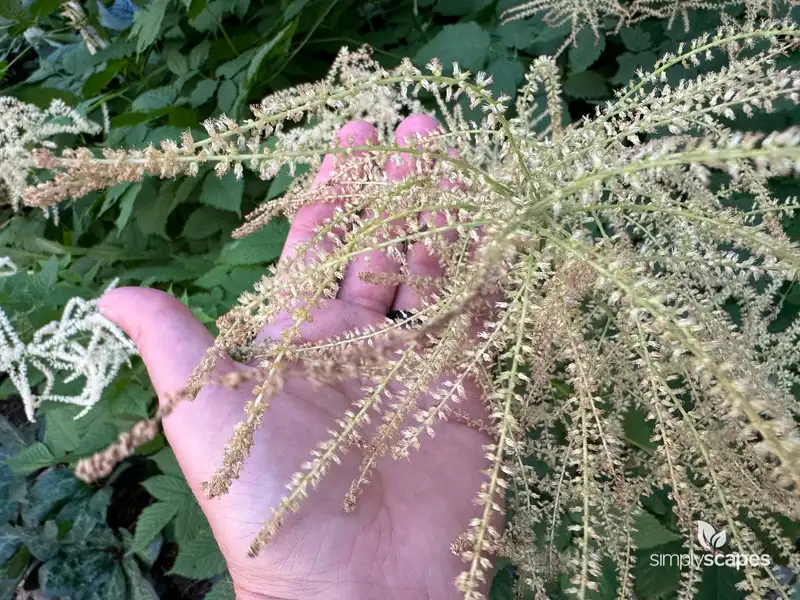
Goat's Beard
Aruncus
Stately plumes of creamy white flowers for moist, shaded gardens.
- Plant Type
- Perennials & Annuals
- Width
- 12-16 In.
- Height
- 10-12 In.
- USDA hardiness zone
- 3 - 9
- Sun requirements
- Full Sun, Part Shade
- Design image count
- 1
Design images (1)

Bring your vision to life
The design images above are drag-and-drop ready — place this plant on a photo of your own yard and see it before you plant it.
Create design onlineAbout Goat's Beard
Aruncus is a genus of clump-forming, rhizomatous perennials commonly called goat’s beard. Its plants have divided foliage and small cream to white flowers held in large, feathery terminal plumes; species and selections differ substantially in stature and garden behavior. [The Royal Horticultural Society](https://www.rhs.org.uk/plants/21541/aruncus/details) summarizes the genus, while [Kew’s Plants of the World Online](https://powo.science.kew.org/taxon/30021056-2) recognizes five accepted species and a temperate Northern Hemisphere native range.
## Landscape Use
Use the genus name as a broad reference when the species or cultivar is not known. Goat’s beard can suit woodland borders and other plantings where its foliage and plume-shaped flowers have room to show. A dwarf species such as Korean goat’s beard and the much taller common goat’s beard are not interchangeable for layout, spacing, or mature scale.
## Seasonal Interest and Siting
Flower timing, mature dimensions, and hardiness depend on the species and selection. The RHS genus profile describes clumping plants with creamy-white flowers but does not give one genus-wide size or calendar. For example, [NC State Extension’s profile of A. dioicus](https://plants.ces.ncsu.edu/plants/aruncus-dioicus/common-name/eastern-goats-beard/) describes a substantially taller North American species. Treat care details for a named species as species-specific rather than applying them to every Aruncus.
## Soil and Water
Many cultivated goat’s beards perform well in fertile soil that stays evenly moist, with sun exposure adjusted to climate and species. Confirm the identity before choosing final spacing, exposure, or irrigation; genus-level identification alone is too broad for precise site prescriptions.
## Maintenance
Allow room for the selected plant’s actual mature form. Check species-level guidance for division or pruning needs; requirements vary, and a routine cutting schedule should not be assumed for an unidentified Aruncus.