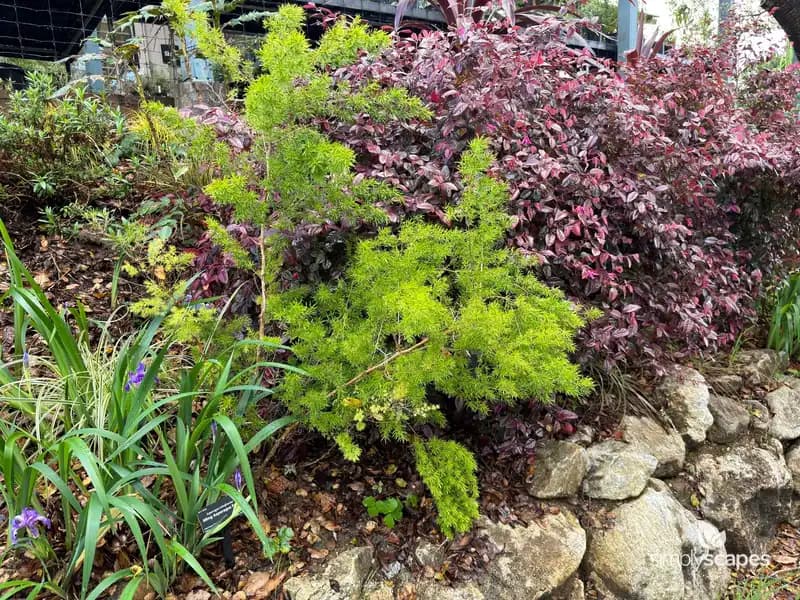
Ming Fern
Asparagus retrofractus
Sculptural zig-zag stems and fluffy pom-pom foliage for a unique garden accent.
- Plant Type
- Perennials & Annuals
- Width
- 3-5 Ft.
- Height
- 18-24 In.
- USDA hardiness zone
- 9 - 11
- Sun requirements
- Full Sun, Part Shade
- Design image count
- 1
Design images (1)

Bring your vision to life
The design images above are drag-and-drop ready — place this plant on a photo of your own yard and see it before you plant it.
Create design onlineAbout Ming Fern
Ming fern is a scrambling, fine-textured asparagus with zigzagging stems and clusters of needle-like green cladodes that resemble small pom-poms. It is a true asparagus, not a fern, and works as an indoor foliage plant, container specimen, hanging basket, or supported outdoor accent in warm climates. [Kew’s Plants of the World Online](https://powo.science.kew.org/taxon/urn:lsid:ipni.org:names:531276-1/general-information) accepts Asparagus retrofractus and places its native range from Namibia to South Africa’s Cape Province.
### Form and placement
Give its arching, scrambling stems room to spread or provide support where a more vertical outline is wanted. Mature size varies with growing conditions: [Kwantlen Polytechnic University’s plant database](https://plantdatabase.kpu.ca/PlantPrint/asre) lists 1.3–2 m tall and 1.5–2 m wide, while many container-grown plants remain smaller. KPU records both full sun and part shade; Singapore’s [NParks Flora & Fauna Web](https://www.nparks.gov.sg/florafaunaweb/flora/8/1/8177) favors semi-shade, so protect foliage from harsh afternoon exposure where heat is intense.
### Soil and water
Use a well-drained mix or garden soil. NParks describes moderate watering, while KPU characterizes water use as high in its local database; in practice, water regularly during active growth and let excess drain away.
## Maintenance
Trim individual stems to shape or remove damaged growth. Propagation is by seed or division according to NParks. Handle cautiously: KPU flags poisonous parts, and the plant should not be eaten.