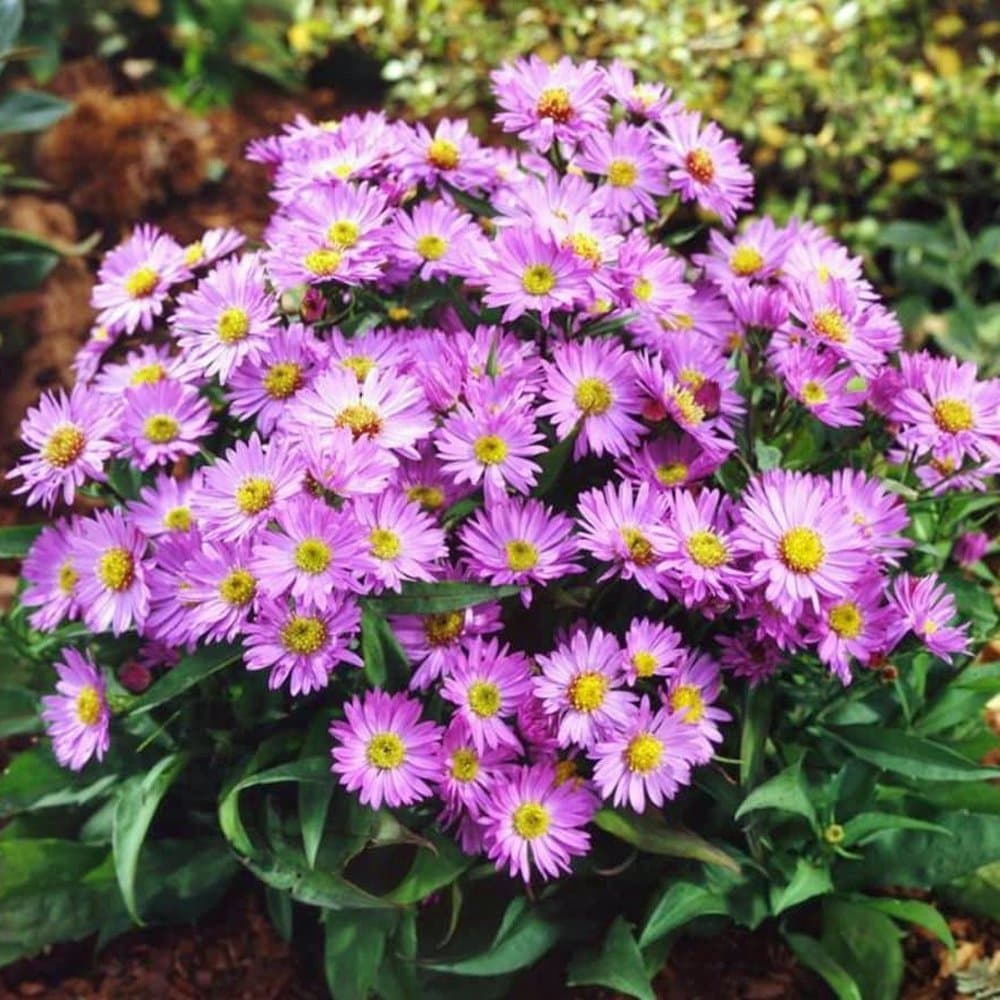
New York Aster
Symphyotrichum novi-belgii
A vibrant late-season bloomer that electrifies autumn gardens with clouds of blue.
- Plant Type
- Perennials & Annuals
- Width
- 12-24 In.
- Height
- 12-24 In.
- USDA hardiness zone
- 4 - 8
- Sun requirements
- Full Sun, Part Shade
- Design image count
- 1
Design images (1)

Bring your vision to life
The design images above are drag-and-drop ready — place this plant on a photo of your own yard and see it before you plant it.
Create design onlineAbout New York Aster
New York aster, also called Michaelmas daisy, is a clump-forming perennial whose flowers range from purple and lavender-purple to white. It blooms in autumn, and mature size varies widely among cultivars; the Royal Horticultural Society gives a species height range of about 30 cm to 1.8 m ([RHS](https://www.rhs.org.uk/plants/1768/aster-novi-belgii/details), [Morton Arboretum](https://mortonarb.org/plant-and-protect/trees-and-plants/new-york-aster/)).
## Form and Placement
Named cultivars differ in height, spread, flower color, and habit. Use taller forms toward the back of a border and shorter selections near paths or in containers. Their late-season flowers support bees and butterflies and combine well with ornamental grasses and other fall bloomers.
## Growing Conditions
Provide full sun to partial shade and moist, well-drained soil. Avoid persistently waterlogged sites, and allow good air circulation around foliage. The former botanical name Aster novi-belgii remains common in horticulture; current botanical references also use Symphyotrichum novi-belgii ([University of Illinois Extension](https://extension.illinois.edu/flowers/new-york-aster-michaelmus-daisy)).
## Maintenance
Water during establishment and dry spells. Divide established clumps every few years to maintain vigor and manage spread. Taller forms may need staking; pinching before midsummer can encourage shorter, bushier growth. Cut stems back after flowering in late autumn or winter, and remove diseased foliage.