Daisy family
Asteraceae
A worldwide flowering plant family with composite flowerheads, familiar ornamentals, and food plants.
- Plant Type
- Perennials & Annuals
- USDA hardiness zone
- 1 - 11
- Sun requirements
- Full Sun, Part Shade
Bring your vision to life
The design images above are drag-and-drop ready — place this plant on a photo of your own yard and see it before you plant it.
Create design onlineAbout Daisy family
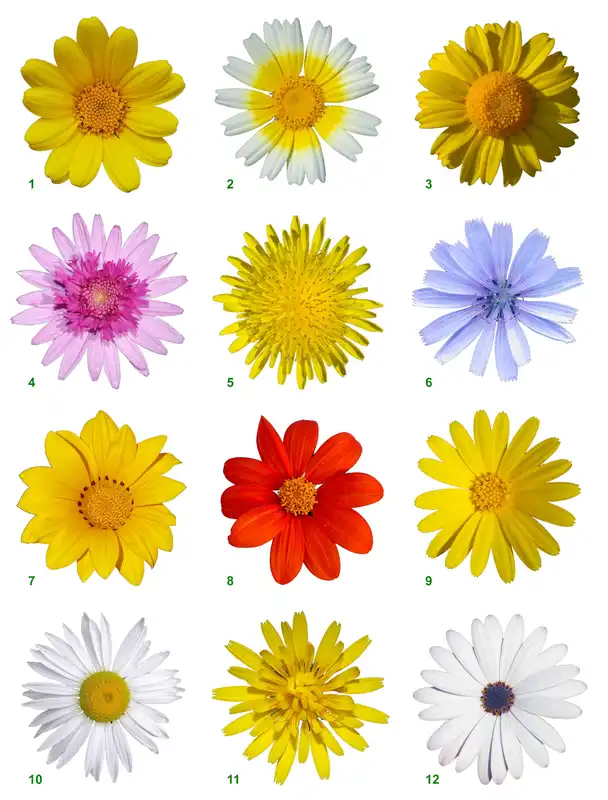
Asteraceae is the daisy, sunflower, or aster family, a worldwide group of flowering plants. Its familiar composite flower heads bring many small florets together, while plants in the family vary widely in habit and form.
## Family characteristics
Asteraceae contains thousands of genera and tens of thousands of species, with estimates varying by source. The [Royal Horticultural Society](https://www.rhs.org.uk/plants/plant-families/asteraceae-plant-family) describes more than 1,900 genera and over 32,000 accepted species; [Plants of the World Online at Kew](https://powo.science.kew.org/taxon/urn:lsid:ipni.org:names:319342-2/general-information) gives about 1,600 genera and estimates up to 25,000 species. The shared flower head, or capitulum, contains clustered florets, but leaf, stem, root, and growth forms differ across the family.
## Garden context
The family includes familiar ornamentals such as cosmos, dahlias, marigolds, echinacea, Helenium, Achillea, and Artemisia, along with food plants such as lettuce, tarragon, and endive. Some members are used as cut flowers. Choose placement and mature size from information for the identified genus, species, or cultivar; the family name alone does not describe one planting form.
## Maintenance
Use care guidance for the exact plant being grown. Light, soil, water, hardiness, size, and pruning needs vary among Asteraceae, so a family-level identification cannot supply a single maintenance plan.