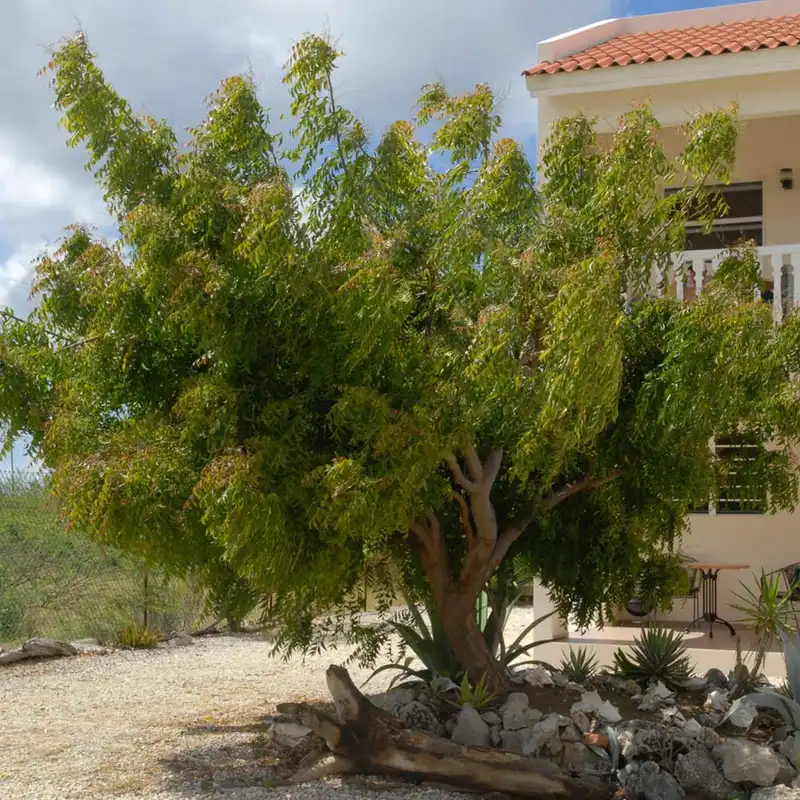
Neem Tree
Azadirachta indica
The versatile 'Village Pharmacy' tree for shade and natural healing.
- Plant Type
- Shade Trees
- Width
- 10-20 Ft.
- Height
- 30-40 Ft.
- USDA hardiness zone
- 4 - 11
- Sun requirements
- Full Sun, Part Shade
- Design image count
- 1
Design images (1)

Bring your vision to life
The design images above are drag-and-drop ready — place this plant on a photo of your own yard and see it before you plant it.
Create design onlineAbout Neem Tree
Neem is a tropical to subtropical tree with a dense, rounded crown of pinnate leaves and furrowed gray-brown bark. Its broad canopy makes it useful for shade in warm climates, while its mature size and sensitivity to frost limit its use in colder landscapes.
## Form and landscape role
The U.S. Forest Service describes neem as a medium to large tree, with adult heights reported across a wide range of 7–30 m. It is planted for shade and for products from its leaves, fruit, and bark. The existing catalog dimensions are retained as plausible landscape values within this broad species range, rather than treated as a ceiling for mature trees.
## Climate and placement
[Kew’s Plants of the World Online](https://powo.science.kew.org/taxon/urn:lsid:ipni.org:names:1213180-2) accepts *Azadirachta indica* and places it primarily in tropical biomes. The [USDA Forest Service profile](https://research.fs.usda.gov/treesearch/30347) documents planting in semiarid regions as well as frost-free climates; it notes evergreen behavior except in frost-prone or dry regions. Choose a warm, sunny site with room for the crown and roots. Do not assume that drought adaptation makes newly planted trees independent of irrigation.
## Maintenance
Water consistently while a young tree establishes, then adjust irrigation to local rainfall, soil drainage, and heat. Keep the root zone free of prolonged waterlogging and allow space for the extensive root system described for established trees. In frost-prone areas, protect young trees or grow them where they can be sheltered; cold can cause leaf loss or limit survival.