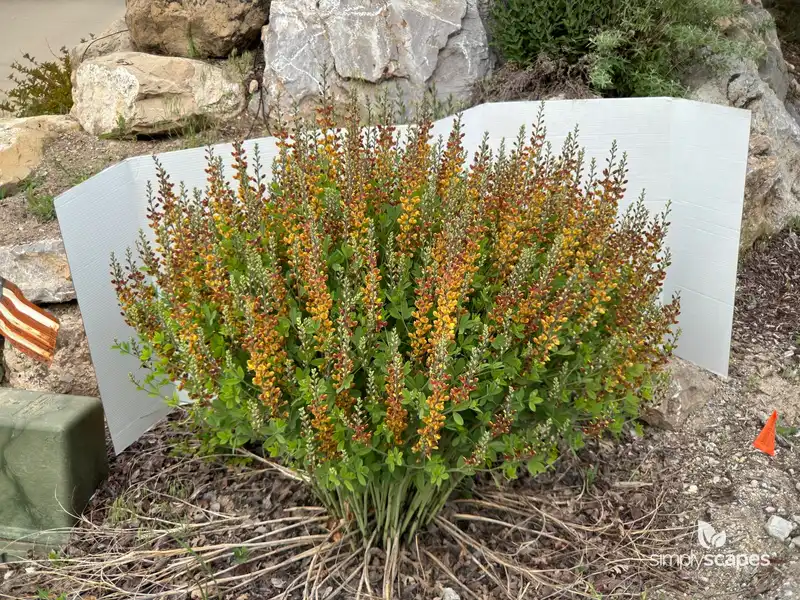
Baptisia
Baptisia
A tough, long-lived native perennial with striking lupine-like flower spikes.
- Plant Type
- Perennials & Annuals
- Width
- 3-4 Ft.
- Height
- 3-4 Ft.
- USDA hardiness zone
- 4 - 9
- Sun requirements
- Full Sun, Part Shade
- Plant developer
- Proven Winners
Bring your vision to life
The design images above are drag-and-drop ready — place this plant on a photo of your own yard and see it before you plant it.
Create design onlineAbout Baptisia
Baptisia, commonly called false indigo, is a genus of North American herbaceous perennials in the legume family. Its roughly 20 species and many named hybrids vary in stature, leaf color, flower color, and growing needs, though many garden forms make substantial clumps with trifoliate foliage and upright pea-shaped flowers in late spring or early summer. [Illinois Extension](https://extension.illinois.edu/blogs/good-growing/2025-05-30-baptisia-bold-beautiful-and-underused-native-perennials) describes this range across the genus.
## Garden character
Use Baptisia as a specimen or repeat it through a broad border where each plant has room to mature. Flower colors include blue, purple, white, and yellow, with additional shades in newer hybrids; some plants form dark seed pods after bloom. These traits differ among species and selections, so consult a named cultivar’s profile for its particular color and size. For example, [Proven Winners’ Decadence® ‘Lemon Meringue’ profile](https://www.provenwinners.com/p/9779) describes that selection specifically.
## Site and landscape use
Many Baptisia perform best in full sun and well-drained soil, and established plants can tolerate dry periods. They develop deep roots and may take a few years to reach mature size and flower fully, so choose a lasting position. The University of Illinois Extension notes that part shade is possible, though flowering may be reduced.
## Maintenance
Water new plants while they establish. Once rooted, many Baptisia need little supplemental water; avoid moving mature plants because their extensive roots are difficult to transplant. Stems die back in winter, and dark pods may be left for seasonal structure or removed as they fade.