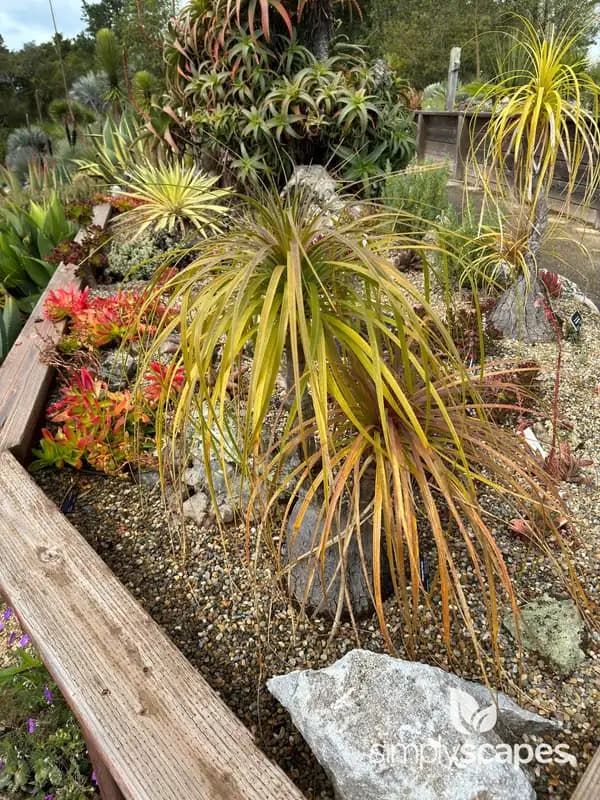
Ponytail Palm
Beaucarnea recurvata
A striking, low-maintenance succulent with a sculptural trunk and cascading ponytail foliage.
- Plant Type
- House Plants & Tropicals
- Width
- 10-15 Ft.
- Height
- 15-30 Ft.
- USDA hardiness zone
- 9 - 11
- Sun requirements
- Full Sun, Part Shade
- Water requirements
- Low
- Design image count
- 9
Design images (9)


Bring your vision to life
The design images above are drag-and-drop ready — place this plant on a photo of your own yard and see it before you plant it.
Create design onlineAbout Ponytail Palm
Ponytail palm is a slow-growing, drought-adapted caudex tree rather than a true palm. Its swollen base stores water, while long, arching leaves form a fountain-shaped crown; in temperate regions it is also grown as a durable container houseplant. [UF/IFAS Extension](https://ask.ifas.ufl.edu/publication/ST093) and [Wisconsin Horticulture](https://hort.extension.wisc.edu/articles/ponytail-palm-beaucarnea-recurvata/) describe its evergreen foliage, water-storing trunk and tolerance of dry conditions.
## Landscape use
In warm climates it can be planted as an architectural specimen in a sunny, well-drained garden. Outdoors, it can develop into a sizable specimen, while container plants remain smaller according to pot size and growing conditions. UF/IFAS lists zones 10A–11, while Wisconsin Extension discusses outdoor use in zones 9–10; protect it from freezing temperatures.
## Siting and soil
Give it full sun to partial shade and sharply drained soil. UF/IFAS reports high drought tolerance and warns that poor drainage can lead to root rot. Kew recognizes the accepted name and places its native range in Mexico's dry shrubland and desert biome. Indoors, provide bright light and a pot with drainage; rotate periodically for even growth.
## Maintenance
Water thoroughly, then allow the growing medium to dry before watering again. Reduce watering in cool, low-light periods, and avoid leaving the caudex or roots in wet soil. Remove only damaged or dead leaves; leaf tips may naturally brown in dry indoor air.