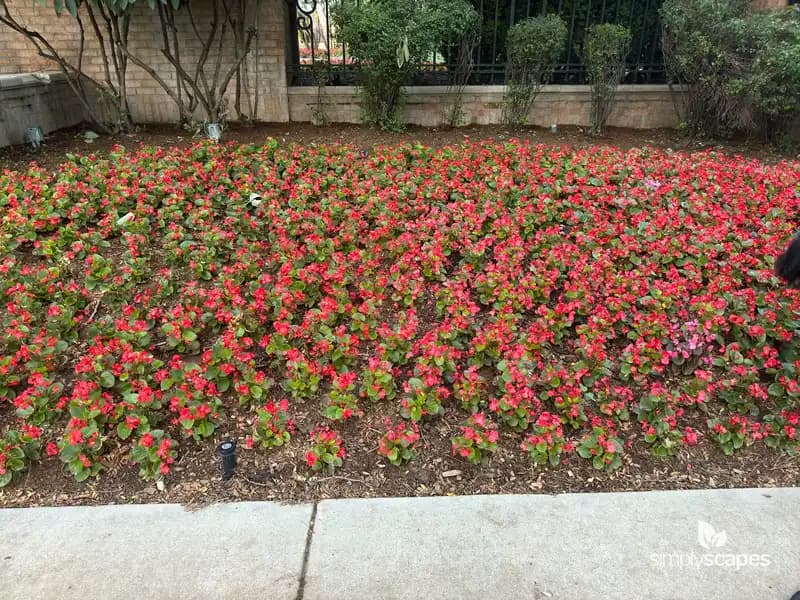
Wax Begonia
Begonia cucullata
A versatile, glossy-leaved perennial with vibrant, year-round blooms.
- Plant Type
- Perennials & Annuals
- Width
- 6-12 In.
- Height
- 6-12 In.
- USDA hardiness zone
- 9 - 11
- Sun requirements
- Full Sun, Part Shade, Full Shade
- Design image count
- 3
Design images (3)


Bring your vision to life
The design images above are drag-and-drop ready — place this plant on a photo of your own yard and see it before you plant it.
Create design onlineAbout Wax Begonia
Wax begonia (*Begonia cucullata*) is a compact, fleshy-stemmed species with rounded, toothed leaves and small flowers that can range from white to pink. It is native to South America, where it grows in warm, wet tropical habitats; in cooler climates it is best used as a seasonal bedding plant or protected container plant.
## Form and growing conditions
Kew accepts *Begonia cucullata* as a species native from Bolivia through Brazil to northern Argentina. North Carolina Extension describes wax begonia forms as mounded and succulent, with green-to-bronze foliage and loose flower clusters that may bloom from spring until frost. Its cultivar notes describe *B. cucullata* var. *cucullata* as compact, with cordate leaves and white-to-pink flowers. The extension's typical wax-begonia garden size is about 6–12 inches high and wide; conditions and cultivar selection affect the result. Wax begonia hybrids are related to this species but are not the same taxon.
## Placement
Use in small borders, edging, window boxes, or containers. Provide moist, humus-rich soil that drains freely; light can range from sun to shade, with bronze-leaved selections generally better in sunnier sites. The species is tropical and not reliably winter hardy in freezing climates.
## Maintenance
Keep soil evenly moist during active growth without leaving roots waterlogged. In cold-winter regions, grow as an annual or bring containers indoors before frost. Remove declining foliage and watch for mealybugs, thrips, rot, and fungal problems in crowded or persistently wet conditions.