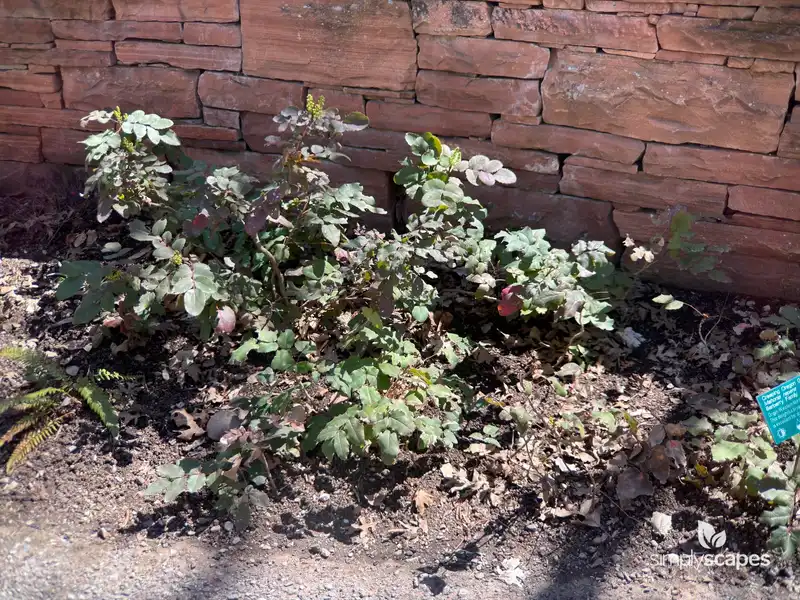
Creeping Barberry
Berberis repens
A versatile evergreen groundcover with holly-like leaves and vibrant yellow spring blooms.
- Plant Type
- Perennials & Annuals
- Width
- 12-24 In.
- Height
- 12-24 In.
- USDA hardiness zone
- 4 - 9
- Sun requirements
- Full Sun, Part Shade, Full Shade
- Design image count
- 2
Design images (2)


Bring your vision to life
The design images above are drag-and-drop ready — place this plant on a photo of your own yard and see it before you plant it.
Create design onlineAbout Creeping Barberry
Creeping barberry (Berberis repens), also called creeping mahonia, is a low evergreen groundcover native to western and central North America. Its holly-like leaves, yellow spring flowers and blue-black berries provide seasonal interest, while its short spreading growth makes it useful beneath shrubs and along dry-shade edges.
## Landscape use
Use it as a groundcover or for erosion control in a planting with room for gradual spread. The [North Carolina Extension profile](https://plants.ces.ncsu.edu/plants/berberis-repens/common-name/creeping-hollygrape/) describes stoloniferous growth and a typical height and spread of 1–2 feet. Kew recognizes B. repens as an accepted temperate subshrub native to western Canada and the western and central United States.
## Size and siting
North Carolina Extension lists USDA hardiness zones 4b–9b. Grow in full sun to partial shade in moist, well-drained, acidic soil; the Extension profile notes that it may need winter protection at the northern edge of its range.
## Maintenance
Keep moisture steady during establishment and avoid waterlogged soil. Trim only to manage spread or remove damaged growth. Spring flowers are lightly fragrant and attract pollinators; the later blue-black berries are edible but sour and may attract birds. The evergreen foliage can take purple or red tones in winter.