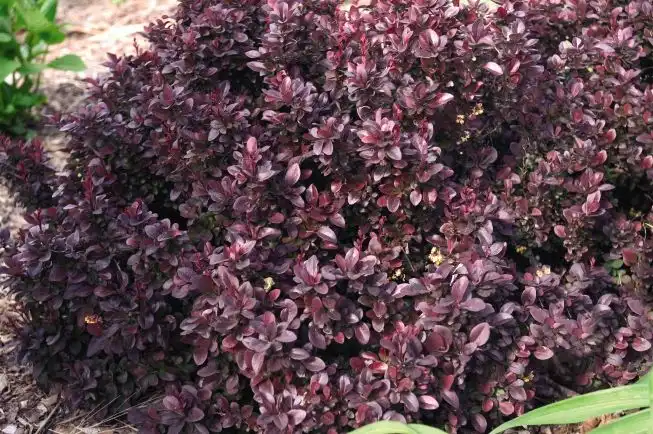
Concorde Dwarf Red-Purple Barberry
Berberis thunbergii atro 'Concorde'
A compact, velvety purple shrub perfect for low-maintenance borders and containers.
- Plant Type
- Shrubs & Roses
- Width
- 24-36 In.
- Height
- 18-24 In.
- USDA hardiness zone
- 4 - 8
- Sun requirements
- Full Sun, Part Shade
- Water requirements
- Medium, High
- Design image count
- 1
Design images (1)

Bring your vision to life
The design images above are drag-and-drop ready — place this plant on a photo of your own yard and see it before you plant it.
Create design onlineAbout Concorde Dwarf Red-Purple Barberry
‘Concorde’ is a low, rounded Japanese barberry with deep maroon-purple foliage that becomes more intense before turning red in autumn. Small yellow flowers appear in late spring and may be followed by a few bright red berries. [Monrovia](https://www.monrovia.com/concorde-japanese-barberry.html) lists it as Berberis thunbergii ‘Concorde’, with a compact 18–24 inch outline and USDA zones 4–8.
## Landscape Use
Use this dwarf shrub as an edging, small hedge, or container accent. Its dark foliage creates a strong contrast with green or gold-leaved plants, while the dense rounded form gives a clear border line.
## Seasonal Interest
New spring foliage is deep red-burgundy. Small yellow flowers appear in late spring, followed by occasional red berries; autumn foliage shifts toward crimson. Monrovia notes that this selection produces little to no viable seed.
## Mature Size
Monrovia lists 18–24 inches tall and wide, while [Briggs Nursery](https://www.briggsnursery.com/plant/berberis-thunbergii-concorde/) reports approximately 2 feet tall by 4 feet wide. The existing values and labels remain plausible between these differing nursery estimates.
## Siting and Soil
Full sun brings the strongest foliage color and flowering, though light shade is tolerated. Plant in average, well-drained soil and avoid wet sites. Monrovia lists USDA zones 4–8.
## Maintenance
Water regularly during the first growing season, then reduce frequency once roots establish. Monrovia reports moderate drought tolerance after establishment and recommends late-winter pruning only when shaping is needed. Its spiny stems call for gloves during maintenance.