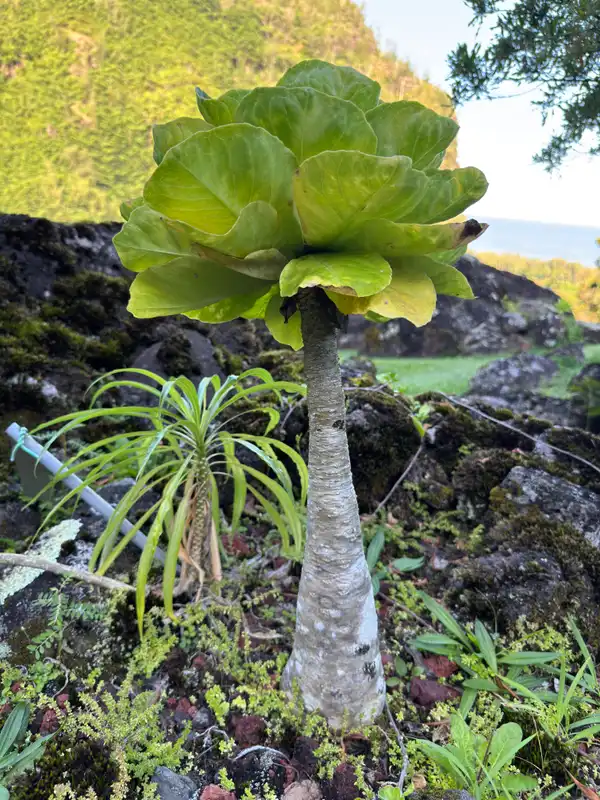
ʻĀlula
Brighamia insignis
- Plant Type
- Succulents
- Width
- 2–3 ft
- Height
- 3–6 ft, rarely taller
- USDA hardiness zone
- 10 - 11
- Sun requirements
- Full Sun, Part Shade
- Water requirements
- Low
- Design image count
- 2
Design images (2)


Bring your vision to life
The design images above are drag-and-drop ready — place this plant on a photo of your own yard and see it before you plant it.
Create design onlineAbout ʻĀlula
ʻĀlula (Brighamia insignis) is a distinctive Hawaiian succulent shrub with a swollen, often tapering stem topped by a rosette of broad green leaves. It makes a striking container specimen, but needs sharp drainage and careful watering to avoid prolonged wet roots.
## Form and flowers
The [Native Plants Hawaiʻi profile](https://nativeplants.hawaii.edu/plants/brighamia-insignis/) describes a variable plant from about 2 feet to more than 10 feet tall, with a relatively narrow spread, pale green leaves, and fragrant yellow tubular flowers. Flowering can occur sporadically through the year in cultivation. The [National Tropical Botanical Garden care guide](https://ntbg.org/wp-content/uploads/2022/05/Brighamia-insignis-NTBG-Plant-Care-Guide-Flyer.pdf) identifies ʻĀlula as Brighamia insignis and recommends partial shade through full sun, an airy well-drained medium, and watering only after the potting mix begins to dry.
Use it as a focal specimen in a protected container or a frost-free garden. Growth varies substantially with age and conditions, so allow ample room for a mature plant. The species is native to Kauaʻi and Niʻihau; conservation sources describe serious wild-population decline, so obtain plants from responsible cultivated sources.
## Growing conditions
Give the plant bright light with some protection while acclimating it to stronger sun. A porous mix with mineral components and a pot that drains freely helps avoid root problems. Allow the medium to approach dry between waterings, then water thoroughly and let excess drain.
## Maintenance
Remove yellowing or damaged lower leaves as they age. Check regularly for snails, slugs, and spider mites, and protect the stem and crown from prolonged cold or waterlogged conditions.