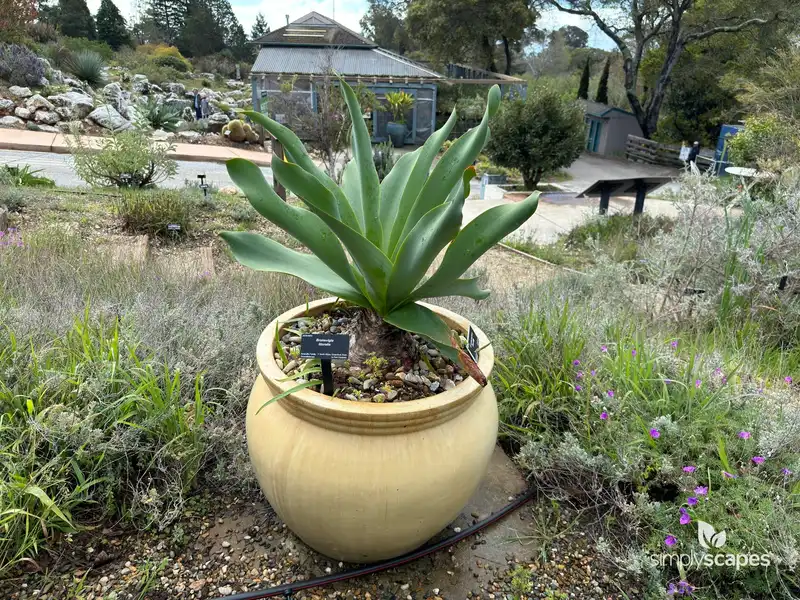
Surfers Candelabra
Brunsvigia litoralis
A magnificent coastal bulb with vibrant red candelabra blooms.
- Plant Type
- Succulents
- Width
- 12-18 In.
- Height
- 1.6-3.3 Ft.
- USDA hardiness zone
- 9 - 11
- Sun requirements
- Full Sun
- Design image count
- 1
Design images (1)

Bring your vision to life
The design images above are drag-and-drop ready — place this plant on a photo of your own yard and see it before you plant it.
Create design onlineAbout Surfers Candelabra
Surfer’s candelabra (*Brunsvigia litoralis*) is a South African bulbous perennial with a dramatic red-to-pink flower head in summer. Its strap-shaped leaves emerge after flowering, creating a distinct seasonal cycle. Site it as a focal point in a sunny, freely draining bed sheltered from hard frost.
## Identity and growing conditions
The [RHS profile](https://www.rhs.org.uk/plants/335587/brunsvigia-litoralis/details) lists a mature height of 0.5–1 m and recommends full sun, light free-draining soil, and shelter from harsh frost. Plant the dormant bulb just below the soil surface. Kew’s [Plants of the World Online](https://powo.science.kew.org/taxon/urn:lsid:ipni.org:names:63502-1/general-information) accepts *B. litoralis* as a bulbous geophyte native to the Eastern Cape. The [SANBI Red List account](https://redlist.sanbi.org/species.php?species=2074-8) identifies it as a South African endemic of coastal sands and assesses it as Endangered, citing habitat pressure including coastal development and invasive species.
## Seasonal character
The flower display is brief. The RHS notes that the tongue-shaped, frilled leaves appear after the flower head has spent, so the plant’s appearance changes through its growth cycle. Its H4 hardiness rating uses a different scale from USDA zones.
## Maintenance
Plant the dormant bulb shallowly in a free-draining medium and choose a sunny, sheltered site. The RHS reports no pruning requirement and notes that large narcissus bulb fly can damage bulbs; aphids, mealybugs, and red spider mites may affect plants under glass. Use nursery-propagated bulbs where available to avoid pressure on wild populations.