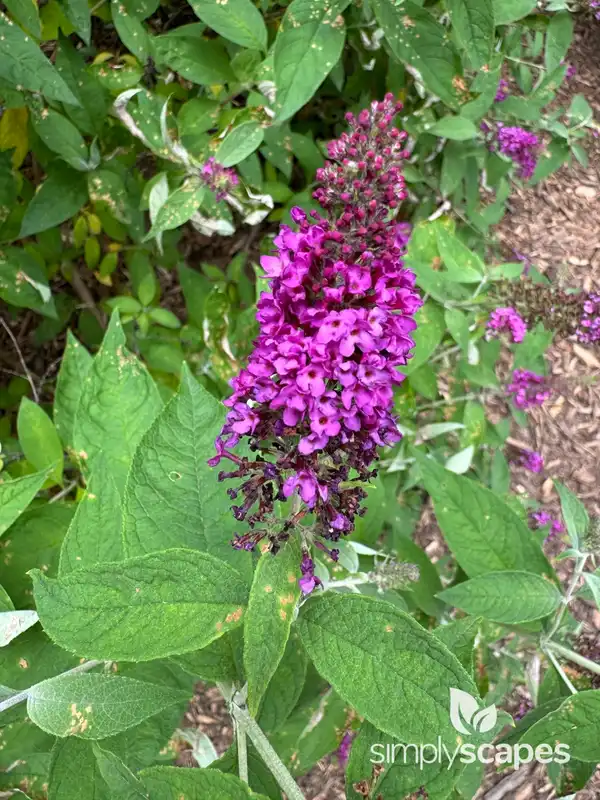
Butterfly Bush
Buddleja davidii
A fast-growing shrub with honey-scented blooms that attract butterflies.
- Plant Type
- Shrubs & Roses
- Width
- 4-15 Ft.
- Height
- 6-12 Ft.
- USDA hardiness zone
- 5 - 9
- Sun requirements
- Full Sun, Part Shade
- Design image count
- 15
Design images (15)


Bring your vision to life
The design images above are drag-and-drop ready — place this plant on a photo of your own yard and see it before you plant it.
Create design onlineAbout Butterfly Bush
Buddleja davidii, commonly called butterfly bush, is a deciduous shrub with arching stems, lance-shaped leaves, and fragrant flower panicles. Plant size and flower color vary among cultivars, so the [North Carolina State Extension profile](https://plants.ces.ncsu.edu/plants/buddleja-davidii/common-name/butterfly-bush/) describes typical species ranges rather than a fixed size for every selection. Its flowers appear in summer and attract butterflies; the University of Arkansas Extension describes flowering that can continue into late fall, depending on cultivar.
## Flowers and form
The species commonly grows as a broad, woody shrub. NC State lists heights of 6–12 feet and spreads of 4–15 feet, with small scented flowers grouped into long panicles. Named cultivars can differ substantially in size, color, and seed production.
## Siting
Plant in full sun and well-drained soil. The species profile lists USDA zones 5–9 and drought tolerance once established. Because butterfly bush can self-seed and become invasive in some regions, check local guidance and choose a suitable cultivar for the site.
## Maintenance
Flowers form on new growth, so early-spring pruning helps control size and encourage flowering. Water while new plants establish, then adjust irrigation to rainfall and soil conditions. Remove spent panicles if you want to limit seed production.