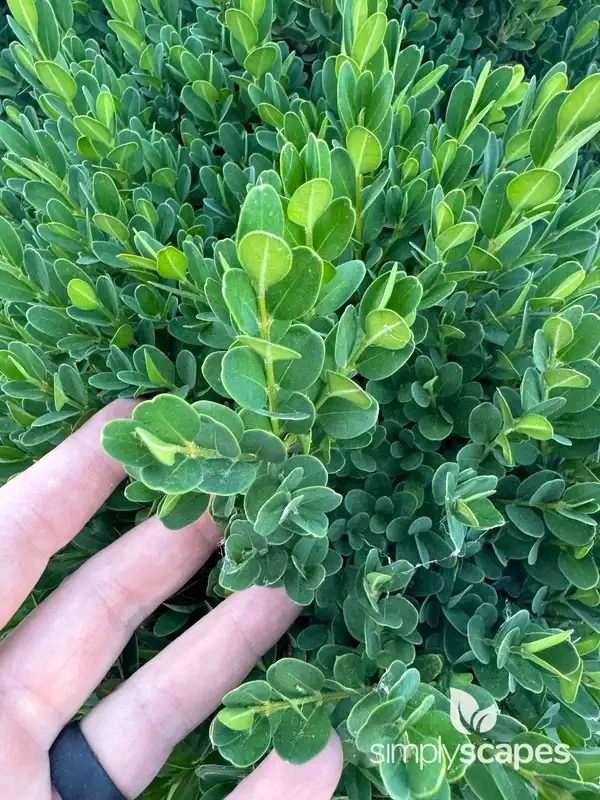
Boxwood - Formal Hedge
Buxus sempervirens - Formal Hedge
The quintessential evergreen for classic formal hedges and topiary.
- Plant Type
- Shrubs & Roses
- Width
- 5-15 Ft.
- Height
- 5-15 Ft.
- USDA hardiness zone
- 4 - 9
- Sun requirements
- Full Sun, Part Shade, Full Shade
- Design image count
- 2
Design images (2)


Bring your vision to life
The design images above are drag-and-drop ready — place this plant on a photo of your own yard and see it before you plant it.
Create design onlineAbout Boxwood - Formal Hedge
Common box (Buxus sempervirens) is a dense, evergreen shrub traditionally clipped into low formal hedges and garden edging. Its small glossy leaves and tolerance of shaping make it useful for structured borders, while good drainage and steady moisture help it establish and stay healthy.
## Garden use and growing conditions
Use this broad species-level record for boxwood sold or grown as a formal hedge; it does not identify a particular cultivar or promise a fixed mature size. The [Royal Horticultural Society](https://www.rhs.org.uk/plants/box/growing-guide) describes common box as evergreen, traditionally used for low formal hedging, and suitable for sun or shade. It recommends well-drained soil that does not dry completely; reliably moist soil is especially important in full sun. Site for air movement and inspect plants for box blight and box tree caterpillar, which can cause serious damage.
## Maintenance
Trim to the intended outline after growth, and thin selected branches when needed to admit light and air into the interior. Check foliage and stems periodically for pests, disease, or drought stress; water at the base during prolonged dry periods, especially while plants establish. No cultivar-specific size or hardiness is asserted here. [RHS box growing guide](https://www.rhs.org.uk/plants/box/growing-guide); [University of Maryland Extension boxwood care](https://extension.umd.edu/resource/boxwood-identify-and-manage-common-problems).