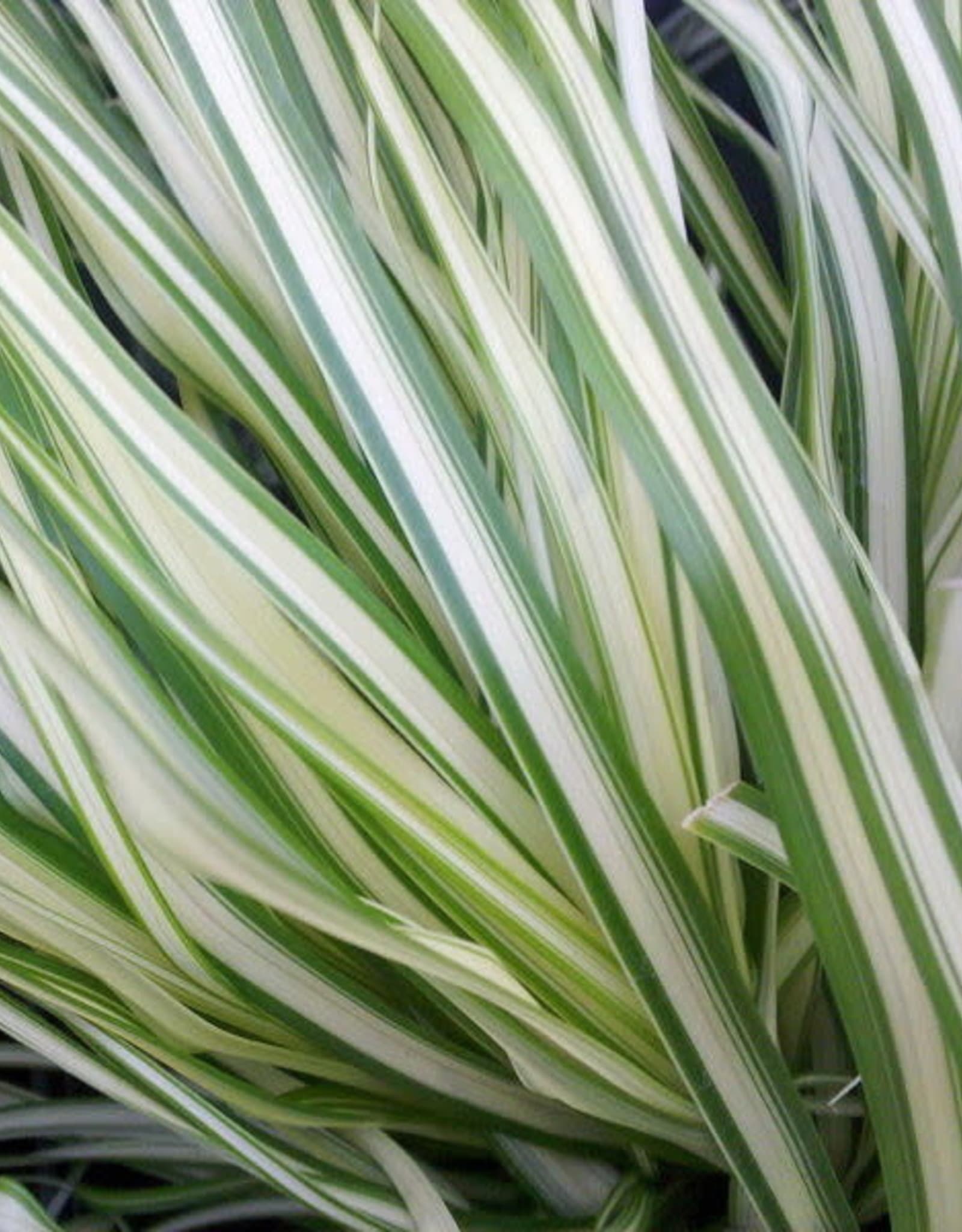
Lightning Strike® Feather Reed Grass
Calamagrostis × acutiflora 'Lightning Strike'
Boldly variegated reed grass with luminous white stripes and tan plumes.
- Plant Type
- Ornamental Grasses
- Width
- 3.3 Ft.
- Height
- 3-5 Ft.
- USDA hardiness zone
- 4 - 9
- Sun requirements
- Full Sun, Part Shade
- Water requirements
- Low, Medium
Bring your vision to life
The design images above are drag-and-drop ready — place this plant on a photo of your own yard and see it before you plant it.
Create design onlineAbout Lightning Strike® Feather Reed Grass
Lightning Strike® is a clump-forming feather reed grass with emerald-green leaves marked by broad white stripes. Feathery purple plumes rise above the foliage in early summer, then age to golden brown and provide winter interest.
## Cultivar and display
The [Hortech cultivar profile](https://hortech.com/plant/calamagrostis-x-acutiflora-lightning-strike/) describes the vertically streaked foliage, purple plumes, and mature height of about 3 ft. It lists Zone 4 hardiness, full sun to light shade, and use in mass plantings and borders. A [Chicago Botanic Garden trial article](https://www.chicagobotanic.org/sites/default/files/2023-12/FG213_High-ranking%20Reed%20Grasses.pdf) also identifies the cultivar and describes its central creamy-white stripes and early-summer flowers.
## Placement
Published sizes vary: Hortech gives a 3 ft mature height, while a Chicago Botanic Garden trial measured this cultivar at 60 in tall and 40 in wide ([trial results](https://www.chicagobotanic.org/sites/default/files/2023-12/FG213_High-ranking%20Reed%20Grasses.pdf)).
Plant in sun or light shade as a vertical accent in a border or grouped planting. The striped foliage distinguishes it from green-leaved feather reed grasses, while its persistent stems extend the seasonal display.
## Maintenance
Leave the plant standing through winter and cut it to the ground in early spring before new growth begins. Keep soil reasonably moist during establishment; Hortech notes that established plants usually need supplemental water only during the hottest summer periods.