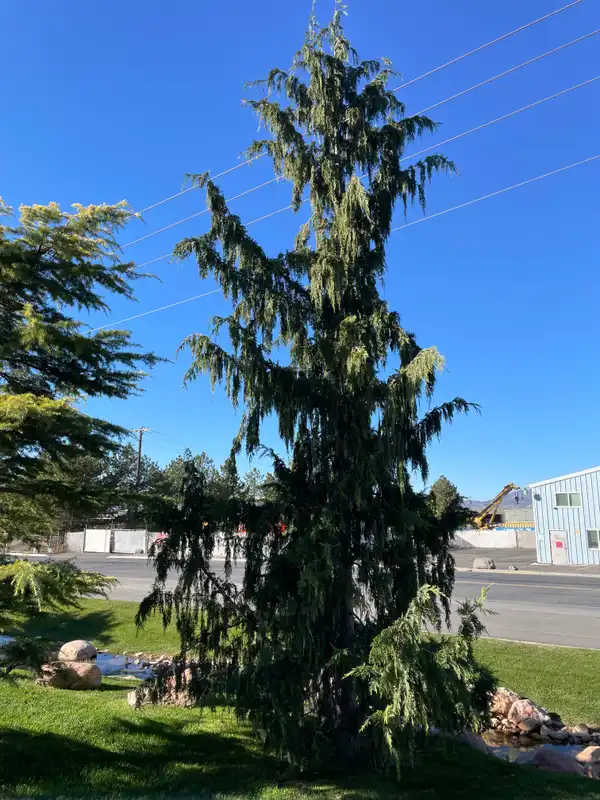
Weeping Alaska Cedar
Callitropsis nootkatensis 'Pendula'
A stunning weeping conifer with graceful, cascading foliage for dramatic landscapes.
- Plant Type
- Conifer Trees
- Width
- 10-15 Ft.
- Height
- 25-45 Ft.
- USDA hardiness zone
- 4 - 7
- Sun requirements
- Full Sun, Part Shade
- Design image count
- 5
Design images (5)


Bring your vision to life
The design images above are drag-and-drop ready — place this plant on a photo of your own yard and see it before you plant it.
Create design onlineAbout Weeping Alaska Cedar
Weeping Alaska Cedar is a strongly architectural evergreen conifer whose horizontal branches carry long, drooping blue-green branchlets. The Pendula cultivar makes a distinctive specimen where its cascading outline can be seen, especially in a cool, moist garden with good drainage.
## Size and landscape role
[North Carolina State Extension](https://plants.ces.ncsu.edu/plants/callitropsis-nootkatensis-pendula/) gives this cultivar a mature size of 30–45 ft tall by 10–15 ft wide and notes that cultivated trees can remain smaller. [The Morton Arboretum](https://mortonarb.org/plant-and-protect/trees-and-plants/alaska-cedar/) lists the weeping form at 25–30 ft tall by 10–12 ft wide. Its year-round foliage and hanging branchlets create an unusual silhouette for a specimen, accent or winter garden.
## Growing conditions
Plant in full sun or partial shade and provide moist, well-drained soil, as [North Carolina State Extension](https://plants.ces.ncsu.edu/plants/callitropsis-nootkatensis-pendula/) recommends. This tree performs best in cool-summer regions with reliable moisture. Mulch over the root zone and shelter it from drying winter winds, particularly in exposed sites. Avoid waterlogged soil.
## Maintenance
Allow space for the crown and keep competing vegetation away from the trunk while the tree establishes. Pruning is generally unnecessary; remove damaged branches selectively while preserving the natural weeping shape.