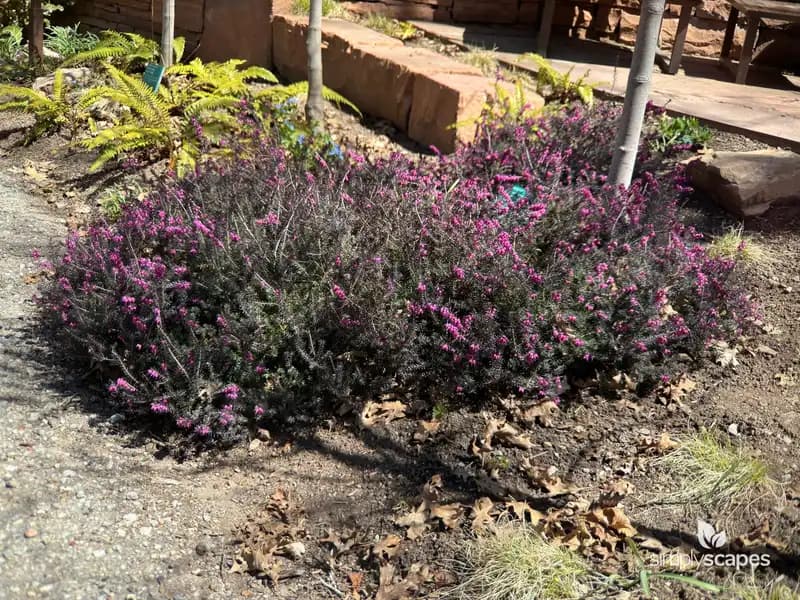
Scotch Heather
Calluna vulgaris
A low-growing evergreen shrub with vibrant summer blooms and year-round interest.
- Plant Type
- Perennials & Annuals
- Width
- 12-24 In.
- Height
- 12-24 In.
- USDA hardiness zone
- 4 - 10
- Sun requirements
- Full Sun, Part Shade
- Design image count
- 1
Design images (1)

Bring your vision to life
The design images above are drag-and-drop ready — place this plant on a photo of your own yard and see it before you plant it.
Create design onlineAbout Scotch Heather
Scotch Heather, Calluna vulgaris, is a low evergreen shrub with fine, scale-like foliage and a dense, mat-forming habit. Its rosy to purplish pink flowers and compact growth make it useful in rock gardens, heath plantings, containers and as low ground cover.
## Form and seasonal interest
The [Royal Horticultural Society](https://www.rhs.org.uk/plants/calluna/growing-guide) describes Calluna as an evergreen ground cover, typically 8 in to 2 ft tall and spreading to about 30 in. [Oregon State University](https://landscapeplants.oregonstate.edu/plants/calluna-vulgaris) describes dense, upright branches that form mats, with rosy to purplish pink flowers; selected cultivars can add reddish winter foliage. Flower and foliage colors vary among cultivars. The [Virginia Cooperative Extension](https://www.pubs.ext.vt.edu/3010/3010-1489/3010-1489.html) places this species' flowering in late summer and autumn.
## Growing conditions
Choose an open, sunny position with acidic, well-drained soil, as the [RHS](https://www.rhs.org.uk/plants/calluna/growing-guide) recommends. Heather performs poorly in alkaline or persistently wet ground; containers can be filled with acidic ericaceous compost. Keep the root zone moist while plants establish and water during prolonged dry spells. [Oregon State University](https://landscapeplants.oregonstate.edu/plants/calluna-vulgaris) describes the species as drought resistant once established.
## Maintenance
After flowering, lightly trim the faded stems and branch tips to keep the plant compact. Do not cut into old, bare wood, from which Calluna regenerates poorly. Avoid heavy fertilizing and replace plants when they become sparse and woody.