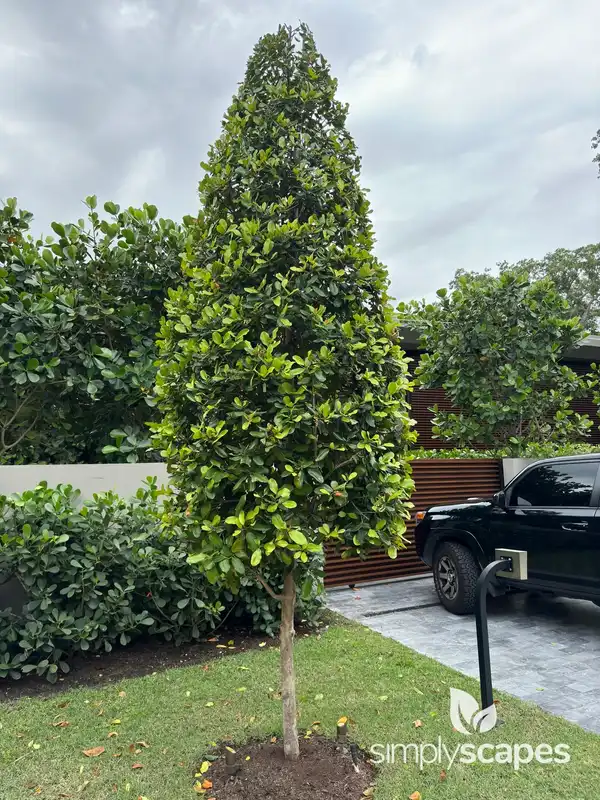
Tamanu Tree
Calophyllum inophyllum
The ultimate coastal evergreen for shade, beauty, and healing oils.
- Plant Type
- Perennials & Annuals
- Width
- 40 Ft.
- Height
- 25-65 Ft.
- USDA hardiness zone
- 10 - 11
- Sun requirements
- Full Sun
- Design image count
- 2
Design images (2)


Bring your vision to life
The design images above are drag-and-drop ready — place this plant on a photo of your own yard and see it before you plant it.
Create design onlineAbout Tamanu Tree
Tamanu, also called kamani, is an evergreen tropical tree with glossy, leathery leaves, a broad crown, and clusters of fragrant white flowers. It is suited to spacious tropical and coastal landscapes, where it can cast dense shade and tolerate strong maritime exposure.
## Landscape use and size
The [National Tropical Botanical Garden](https://www.ntbg.org/database/plants/detail/calophyllum-inophyllum) describes kamani as a large spreading tree that can reach about 60 feet tall, with leathery leaves and small fragrant white flowers. The [Maui Nui Botanical Gardens](https://mnbg.org/hawaiian-native-plant-collection/kamani-botanical-calophyllum-inophyllum/) lists a 25–65-foot height and about 40 feet of spread. Mature size varies with climate and growing conditions; provide ample room and do not plant where dense shade would be a problem.
## Siting
This species is associated with tropical and subtropical regions. Kew’s [Plants of the World Online](https://powo.science.kew.org/taxon/urn:lsid:ipni.org:names:427190-1/general-information) places it in the wet tropical biome and describes rocky or sandy seashores as habitat. Maui Nui Botanical Gardens recommends full sun and notes tolerance of strong winds, salt exposure, and occasional inundation. [UF/IFAS lists USDA hardiness zones 10B through 11](https://www.researchgate.net/publication/400889653_Calophyllum_inophyllum_Beauty_Leaf_ENH274ST115102003), so this tree is unsuitable for cold-winter regions.
## Maintenance
Give the tree enough room for its crown and avoid routine size-reduction pruning that would compromise its natural form. Water young trees during establishment, then adjust irrigation to local rainfall and soil drainage. In cold-winter regions, choose a protected tropical microclimate or grow a different tree suited to the local winter temperatures.