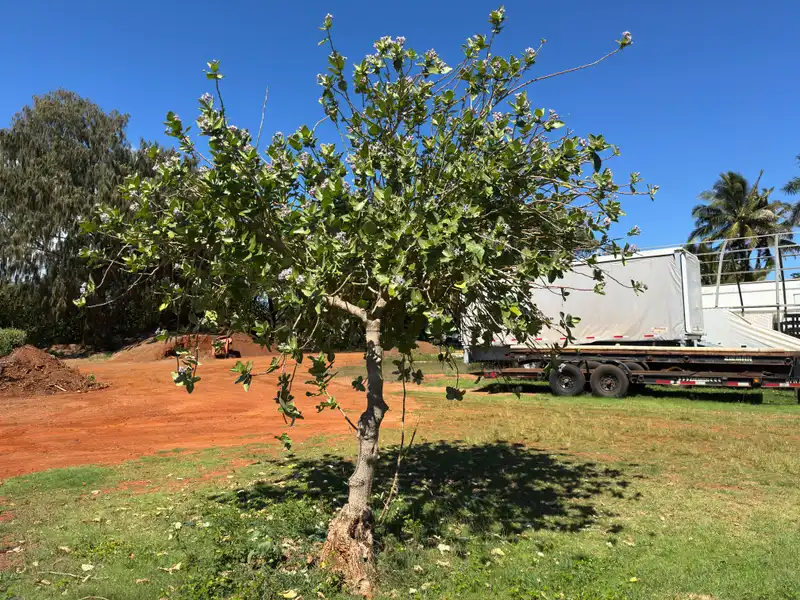
Crown Flower
Calotropis gigantea
- Plant Type
- Shrubs & Roses
- Width
- Up to 15 Ft.
- Height
- Up to 15 Ft.
- USDA hardiness zone
- 10 - 11
- Sun requirements
- Full Sun
- Water requirements
- Moderate
- Design image count
- 1
Design images (1)

Bring your vision to life
The design images above are drag-and-drop ready — place this plant on a photo of your own yard and see it before you plant it.
Create design onlineAbout Crown Flower
Crown flower, also called giant milkweed, is a large tropical shrub with broad, gray-green leaves and clusters of waxy white to lavender flowers. Its architectural foliage and distinctive flowers suit frost-free gardens, but regional planting guidance matters because the species is assessed as a high invasion risk in Florida.
## Flowers and landscape use
The [State Botanical Garden of Odisha](https://www.statebotanicalgardenodisha.org/plant-details.php?purl=arakha) describes an evergreen spreading shrub with opposite gray-green leaves and showy white or purplish-pink flowers. [Kew’s Plants of the World Online](https://powo.science.kew.org/taxon/urn:lsid:ipni.org:names:95173-1/general-information) accepts Calotropis gigantea and places its native range in southern China and tropical Asia. [UF/IFAS describes crown flower as reaching 15 feet tall and wide](https://gardeningsolutions.ifas.ufl.edu/care/weeds-and-invasive-plants/invasive-plant-update-fall-2024/); allow room for that broad, branching habit and check local guidance before planting.
## Siting and regional context
This is a warm-climate plant, best considered for frost-free or nearly frost-free sites. UF/IFAS classifies it as **High Invasion Risk** in Florida and says it is predicted to be invasive and not recommended there. That Florida assessment is regional and should not be read as a universal status for every location; consult local invasive-plant authorities before introducing it.
## Maintenance
Wear gloves and avoid eye contact when pruning: the plant produces milky latex, and reliable source guidance should be consulted for safe handling in your region. Remove damaged stems with clean tools and contain seed dispersal where local authorities require it. Do not use this species where its spread is prohibited or likely to affect natural areas.