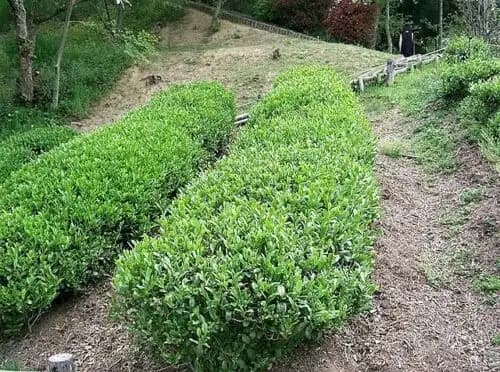
Tea Plant
Camellia sinensis
The ultimate garden-to-table evergreen: the source of all true tea.
- Plant Type
- Shrubs & Roses
- Width
- 4-8 Ft.
- Height
- 6-15 Ft.
- USDA hardiness zone
- 6 - 9
- Sun requirements
- Full Sun, Part Shade
- Design image count
- 4
Design images (4)


Bring your vision to life
The design images above are drag-and-drop ready — place this plant on a photo of your own yard and see it before you plant it.
Create design onlineAbout Tea Plant
Tea Plant, Camellia sinensis, is an evergreen shrub or small tree grown both for its glossy leaves and as an ornamental camellia. Its fragrant white flowers, sometimes pink-tinged, appear in fall and early winter, and its young leaves and buds can be harvested and processed into tea.
## Form and garden use
[NC State Extension](https://plants.ces.ncsu.edu/plants/camellia-sinensis/common-name/tea-plant/) gives a broad mature range of about 6–15 feet tall and 4–8 feet wide. The shrub grows slowly and develops dense, dark green foliage that can form an informal hedge or screen. Tea plants also suit edible gardens and large containers. The Chinese variety is generally more cold tolerant than the Assam type.
## Growing conditions
Provide full sun or partial shade and acidic, moist but well-drained soil. A sheltered site with reliable moisture helps maintain healthy growth. Plants tolerate some heat and drought once established, though consistent water supports new shoots and leaf production. [NC Cooperative Extension tea-growing guide](https://henderson.ces.ncsu.edu/news/growing-tea-at-home/) also recommends ample water in well-drained acidic soil and tip pruning to encourage harvestable shoots. The fragrant flowers attract bees.
## Maintenance
For ornamental use, prune lightly to maintain shape after flowering. For leaf production, tip pruning before spring growth encourages branching and harvestable shoots. Watch for scale and aphids, especially on stressed plants; avoid pesticide exposure near harvest.