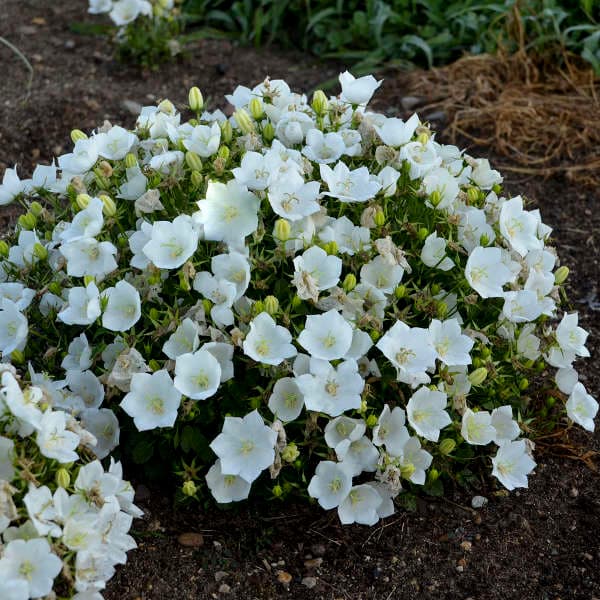
White Clips Bellflower
Campanula carpatica 'White Clips'
A compact, mound-forming perennial with a profusion of snowy white, bell-shaped blooms.
- Plant Type
- Perennials & Annuals
- Width
- 8-12 In.
- Height
- 6-10 In.
- USDA hardiness zone
- 3 - 9
- Sun requirements
- Full Sun, Part Shade
- Water requirements
- Moderate
Bring your vision to life
The design images above are drag-and-drop ready — place this plant on a photo of your own yard and see it before you plant it.
Create design onlineAbout White Clips Bellflower
White Clips is a compact form of Carpathian bellflower, Campanula carpatica, with bright green foliage and upturned white, bell-shaped flowers. The Royal Horticultural Society lists Campanula carpatica ‘White Clips’ as a synonym of ‘Weisse Clips’ and describes a low mound with flowers in summer and early autumn. The live height and width are retained because they fit published cultivar ranges and local growing conditions vary.
## Flowers and habit
This low, clump-forming perennial carries open bells above rounded, toothed leaves. The RHS describes a mature height up to 25 cm; NCSU Extension notes that White Clips is compact, slow-growing, and pure white-flowered. Its neat form suits rock gardens, edging, border fronts, and containers.
## Siting
Grow in full sun or partial shade in well-drained soil. Keep the root zone from becoming overly wet or dry, and provide adequate moisture during dry weather. The current USDA zones 3–9, sun exposure, and moderate water selection are retained.
Sources: [Royal Horticultural Society White Clips profile](https://www.rhs.org.uk/plants/114490/campanula-carpatica-f-alba-weisse-clips/details) · [NCSU Extension Carpathian bellflower profile](https://plants.ces.ncsu.edu/plants/campanula-carpatica/common-name/carpathian-bellflower/) · [Wisconsin Horticulture on Campanula carpatica](https://hort.extension.wisc.edu/articles/campanula-carpatica-blue-clips-white-clips/)
## Maintenance
Remove faded flowers if you want to prolong flowering. NCSU Extension recommends dividing clumps every two to four years in spring or late summer to maintain vigor. Avoid poorly drained soil, especially where wet winters can damage the plant.