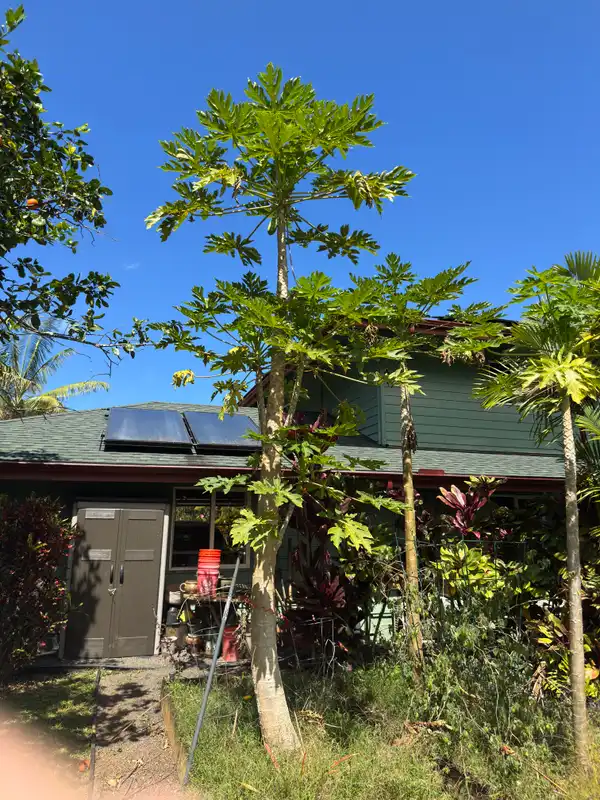
Papaya
Carica papaya
- Plant Type
- Edible Plants
- Width
- 5–7 ft
- Height
- 10–15 ft, sometimes taller
- USDA hardiness zone
- 9 - 11
- Sun requirements
- Full Sun
- Water requirements
- High
- Design image count
- 1
Design images (1)

Bring your vision to life
The design images above are drag-and-drop ready — place this plant on a photo of your own yard and see it before you plant it.
Create design onlineAbout Papaya
Papaya is a fast-growing tropical plant with one soft, upright trunk and a crown of very large, deeply lobed leaves. Small flowers form close to the trunk, and pollinated flowers develop into edible fruit that ripens from green to yellow-orange. Individual plants may have male, female, or bisexual flowers, so fruit set depends on the plant’s sex and pollination.
## Growth and fruit
The [University of Florida IFAS profile](https://ask.ifas.ufl.edu/publication/FP106) lists papaya as Carica papaya in the Caricaceae, with fast growth, full sun, USDA zones 9B–11, and typical height and spread ranges of 10–15 feet by 5–7 feet. It describes the species’ flowers and fruit and notes the need for uniform root-zone moisture. [Kew’s Plants of the World Online](https://powo.science.kew.org/taxon/urn:lsid:ipni.org:names:30011248-2/general-information) records the species’ varied male, female, and bisexual flower forms and fruit with orange or reddish flesh. The live catalog’s dimensions and zones are retained as plausible, with local climate and management affecting size.
## Siting
Give papaya a warm, sunny, sheltered spot with well-drained soil. It is frost sensitive, and cool conditions can slow growth or damage plants. Keep soil evenly moist during active growth, but avoid salty or poorly drained sites.
## Maintenance
Protect plants from cold and strong wind. Water steadily during dry weather and monitor for whiteflies and other local pests. Harvest fruit as its skin begins to change color, then allow it to finish ripening at room temperature.