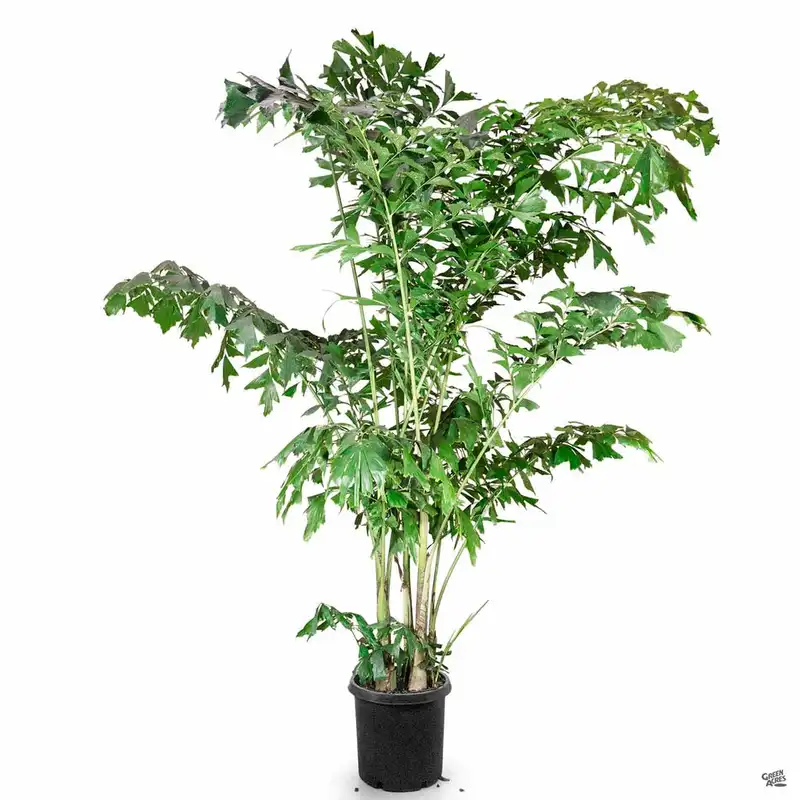
Fishtail Palm Tree
Caryota mitis
A lush, multi-stemmed palm with unique fishtail-shaped foliage.
- Plant Type
- House Plants & Tropicals
- Width
- 10-12 Ft.
- Height
- 20-30 Ft.
- USDA hardiness zone
- 10 - 11
- Sun requirements
- Full Sun, Part Shade, Full Shade
- Design image count
- 6
Design images (6)


Bring your vision to life
The design images above are drag-and-drop ready — place this plant on a photo of your own yard and see it before you plant it.
Create design onlineAbout Fishtail Palm Tree
Caryota mitis is a clustering palm with evergreen, twice-divided leaves whose jagged leaflets resemble a fish’s tail. Its multi-stemmed form and tropical foliage suit sheltered warm-climate gardens and bright interior spaces. [UF/IFAS Extension](https://ask.ifas.ufl.edu/publication/ST124) describes its habit, size range, uses, and culture; [North Carolina Extension](https://plants.ces.ncsu.edu/plants/caryota-mitis/common-name/fishtail-palm/) adds details about its leaves and flowering sequence.
## Landscape use
Grow it as a large specimen, screen, or container palm where there is room for the clump to expand. It can also be used indoors in a spacious, well-lit setting. Published height and spread estimates vary with climate and growing conditions, and the palm needs protection from cold outdoors.
## Foliage and flowers
Long, arching, bipinnate leaves have medium-green leaflets with irregular, fish-tail-like tips. Purple flowers appear in branched clusters. This species forms new stems at the base; each stem flowers once and then dies, while the remaining clump can continue growing. Dark berries follow flowering and may irritate skin.
## Siting and soil
Caryota mitis tolerates a broad range of light, from sun to shade, and grows in fertile, well-drained soil. Shelter outdoor plants from cold and strong wind. Keep container soil appropriately moist while allowing excess water to drain.
## Maintenance
Remove dead or damaged leaves as needed. Cut out a stem after it finishes flowering and dies. Inspect indoor plants for scale and spider mites, which can become troublesome in dry interior conditions.