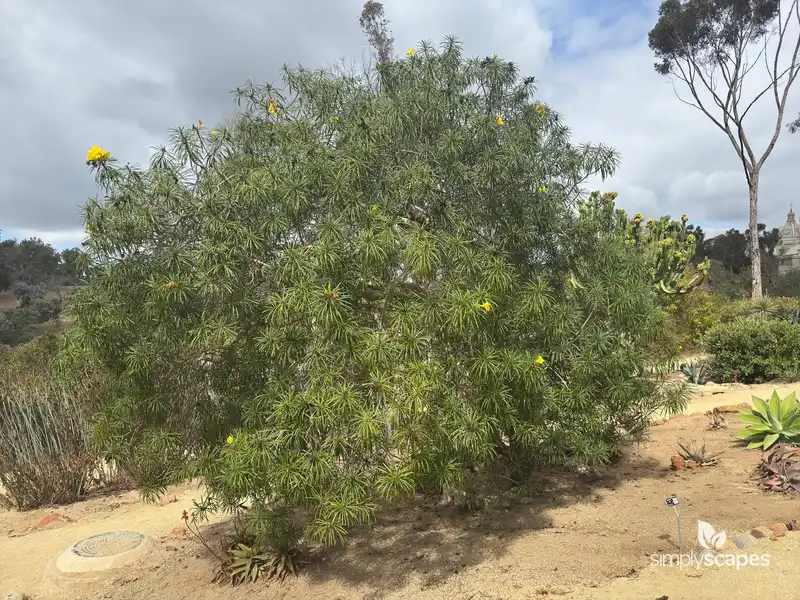
Yellow Oleander
Cascabela thevetia
A vibrant tropical evergreen with sunny yellow blooms and glossy, willow-like foliage.
- Plant Type
- Flowering Trees
- Width
- About 4–5 ft
- Height
- About 4–8 ft; taller in tropical conditions
- USDA hardiness zone
- 8 - 11
- Sun requirements
- Full Sun, Part Shade
- Water requirements
- Medium
- Design image count
- 4
Design images (4)


Bring your vision to life
The design images above are drag-and-drop ready — place this plant on a photo of your own yard and see it before you plant it.
Create design onlineAbout Yellow Oleander
Yellow oleander is an evergreen tropical shrub or small tree with narrow, glossy leaves and funnel-shaped yellow to apricot flowers. The [North Carolina Extension Plant Toolbox](https://plants.ces.ncsu.edu/plants/cascabela-thevetia/) describes its cultivation and toxicity, while the [University of Arizona Campus Arboretum](https://apps.cals.arizona.edu/arboretum/taxon.aspx?id=275) documents the flowers, fruit, and landscape form.
## Landscape use
In warm climates, this upright plant can serve as a flowering screen, hedge, or patio specimen. In cooler regions it is commonly grown in a container and protected indoors during winter. Mature size varies with climate; tropical specimens can become substantially larger than plants grown in pots or cooler sites.
## Foliage and flowers
The leaves are long, narrow, green, and arranged alternately along the stems. Fragrant, funnel-shaped flowers appear in terminal clusters, usually yellow and sometimes apricot-toned. Green fruits turn dark as they mature.
## Siting and soil
Grow in full sun or partial shade in fertile soil with good drainage. Water regularly during active growth, allowing the soil to dry somewhat between waterings. Container plants need a free-draining mix and a bright, protected winter location.
## Maintenance
Lightly shape after flowering and remove spent flowers if you want to limit fruit formation. All parts are poisonous if eaten, and cut stems release sap that can irritate skin; wear gloves when pruning and keep the plant away from children and pets.