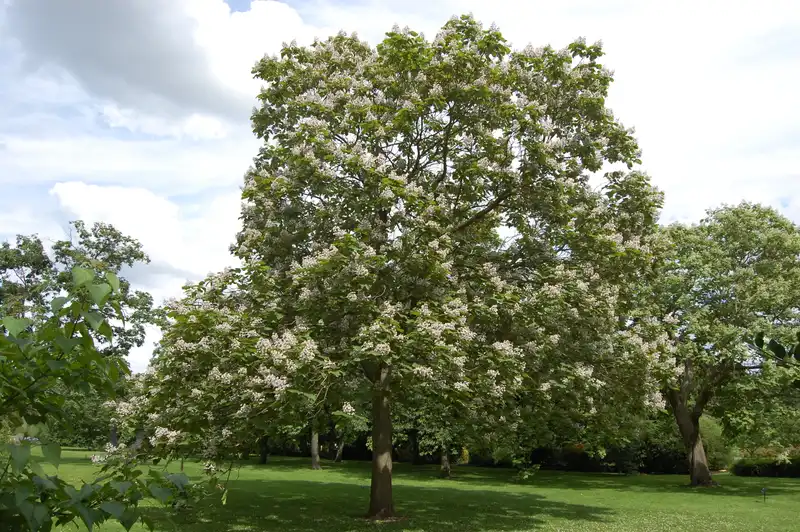
Purpurea Purple Catalpa
Catalpa × erubescens 'Purpurea'
A stunning tree with dark purple spring leaves and showy white summer flowers.
- Plant Type
- Shade Trees
- Width
- 40-50 Ft.
- Height
- 40-50 Ft.
- USDA hardiness zone
- 5 - 8
- Sun requirements
- Full Sun
- Water requirements
- Moderate
Bring your vision to life
The design images above are drag-and-drop ready — place this plant on a photo of your own yard and see it before you plant it.
Create design onlineAbout Purpurea Purple Catalpa
Catalpa × erubescens 'Purpurea' is a deciduous ornamental tree best known for its dark purple new leaves, which mature toward dark green. Its upright clusters of white flowers have yellow and purple markings, and long narrow pods follow. [Oregon State University](https://landscapeplants.oregonstate.edu/plants/catalpa-erubescens-purpurea) documents this named selection’s foliage, flowers, mature size, and hardiness; [The Morton Arboretum](https://mortonarb.org/plant-and-protect/trees-and-plants/hybrid-catalpa/) gives additional size and care guidance for hybrid catalpa.
## Seasonal character
The strongest purple color appears as leaves emerge in spring; foliage darkens to green as it matures. Flower clusters appear in spring to early summer, and the persistent pods may remain after leaf fall. This hybrid has parentage involving Catalpa bignonioides and C. ovata.
## Siting
Provide open space for a large crown and avoid planting where the mature spread will conflict with buildings, utilities, or parking. It grows in full sun or partial shade. Moist, well-drained soil supports establishment, while the mature tree tolerates a range of conditions. Catalpa wood may be brittle and vulnerable to wind damage, so consider exposure and the location of targets below the canopy.
## Maintenance
Plan for fallen leaves and pods and inspect the structure as the tree grows. Prune when needed to maintain sound branching, using an arborist for large limbs. Oregon State University lists this selection as hardy to USDA Zone 5; published mature-size estimates vary by site.