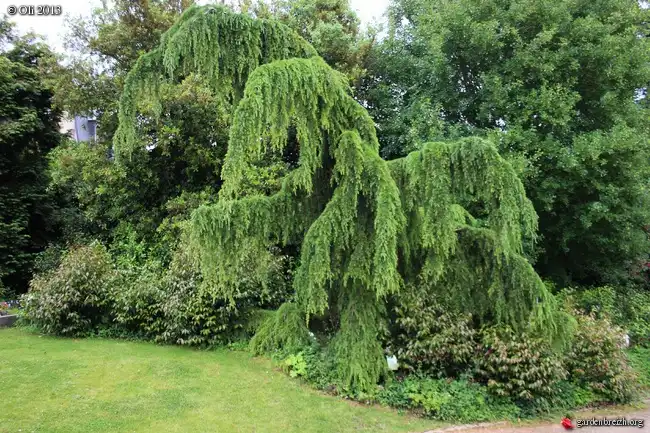
Weeping Deodar Cedar Tree
Cedrus deodara 'Pendula'
An elegant, weeping evergreen with cascading blue-green needles for dramatic garden focal points.
- Plant Type
- Conifer Trees
- Width
- 10 Ft.
- Height
- 15 Ft.
- USDA hardiness zone
- 6 - 9
- Sun requirements
- Full Sun, Part Shade
- Design image count
- 9
Design images (9)


Bring your vision to life
The design images above are drag-and-drop ready — place this plant on a photo of your own yard and see it before you plant it.
Create design onlineAbout Weeping Deodar Cedar Tree
Weeping Deodar Cedar is a needled evergreen cultivar with sweeping branches and dark blue-green needles. Its weeping outline can be trained upright or allowed to spread close to the ground, making the plant a distinctive specimen for a spacious garden. The North Carolina Extension profile describes a tree reaching about 15 feet and recommends staking while young to keep it from sprawling.
## Form and placement
The [North Carolina Extension profile](https://plants.ces.ncsu.edu/plants/cedrus-deodara-pendula/common-name/weeping-himalayan-cedar/) identifies the exact cultivar and describes a spreading, weeping habit, blue-green fragrant needles, and use as a specimen or near ponds. Full sun to partial shade and amended, well-drained acidic or neutral soil suit it. The profile lists USDA zones 6a–9b; local exposure and winter conditions can affect performance.
## Maintenance
Stake young plants if an elevated, sculptural form is wanted; otherwise allow the branches to cascade naturally. Protect young trees from strong winds and frost, and keep the root zone draining freely. The extension profile lists drought and dry-soil resistance, though newly planted cedars still need establishment watering.