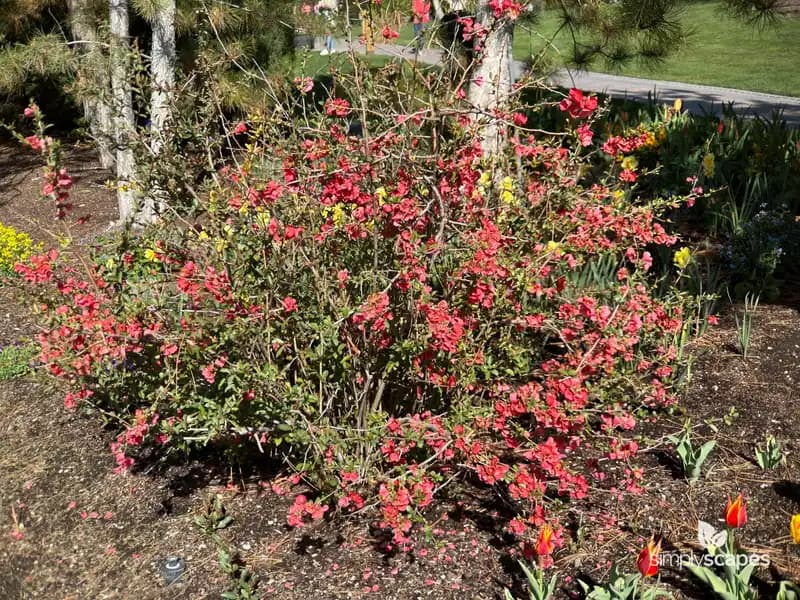
Flowering Quince Tree
Chaenomeles
A vibrant early-spring bloomer with stunning flowers and edible fruit.
- Plant Type
- Flowering Trees
- Width
- 3-10 Ft.
- Height
- 3-10 Ft.
- USDA hardiness zone
- 5 - 9
- Sun requirements
- Full Sun, Part Shade
Bring your vision to life
The design images above are drag-and-drop ready — place this plant on a photo of your own yard and see it before you plant it.
Create design onlineAbout Flowering Quince Tree
Flowering quince (Chaenomeles) is a genus of deciduous shrubs, commonly grown for spring flowers and often thorny branching. Species and cultivars vary in mature size, flower color, and growth form, so use selection-specific information when planning a planting. The genus is native to eastern Asia and belongs to the rose family.
## Landscape character
[Oregon State University’s landscape plant reference](https://landscapeplants.oregonstate.edu/chaenomeles) describes three species of flowering quince as deciduous shrubs, often with thorny branches, simple serrated leaves, showy flowers, and fragrant fruit. The [Royal Horticultural Society profile](https://www.rhs.org.uk/plants/3461/chaenomeles-japonica/details) describes the genus as usually spiny and notes cup-shaped spring flowers followed by green or yellow fruits. Larger selections can form informal barriers or hedges; smaller Japanese quince forms suit mixed borders.
## Growing conditions
Give flowering quince sun for strong bloom, while part shade is suitable for many selections. Well-drained soil is a practical starting point, but species and cultivar requirements differ. Check the named selection’s mature width before placing it beside paths, walls, or neighboring plants.
## Maintenance
For early-flowering deciduous shrubs, the [RHS pruning guide](https://www.rhs.org.uk/plants/types/shrubs/pruning-early-flowering) recommends pruning after flowering. Remove dead or damaged growth and thin crowded stems as needed; timing and severity should follow the individual species or cultivar.