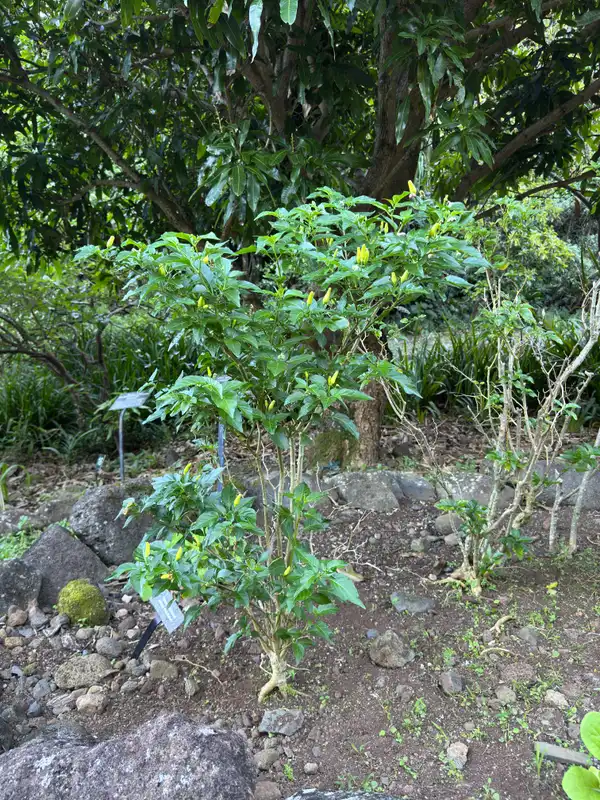
Chili Pepper
Capsicum annuum
- Plant Type
- Edible Plants
- Width
- 6–12 In.
- Height
- 1–3.7 Ft.
- USDA hardiness zone
- 9 - 11
- Sun requirements
- Full Sun
- Water requirements
- Moderate
- Design image count
- 1
Design images (1)

Bring your vision to life
The design images above are drag-and-drop ready — place this plant on a photo of your own yard and see it before you plant it.
Create design onlineAbout Chili Pepper
Capsicum annuum includes familiar chili, cayenne, sweet, and ornamental peppers, with fruit shape, size, color, and heat varying widely among cultivars. Plants are frost-tender and are usually grown as warm-season annuals where winters freeze.
## Growing
Choose a full-sun site with rich, well-drained soil and keep the root zone evenly moist. Start seeds indoors six to eight weeks before the last frost, then transplant after frost danger has passed; pepper roots can be sensitive to disturbance. Small white to purple flowers usually appear in summer, followed by berries whose color and culinary heat depend on the cultivar. Pinching young plants can encourage bushier growth.
## Landscape and Kitchen Use
Grow peppers in an edible garden, a sunny border, or a container. Select a named cultivar for predictable fruit size, flavor, color, and heat, since those traits cannot be generalized across the species. The species is frost-tender, so treat it as an annual in cold-winter climates.
## Maintenance
Water consistently without leaving the soil waterlogged, and harvest fruit at the stage suited to the selected cultivar. Watch for aphids, whiteflies, cutworms, pepper maggots, and Colorado potato beetles. [NC State Extension](https://plants.ces.ncsu.edu/plants/capsicum-annuum/) describes the species’ cultivation, flowers, uses, and wide cultivar variation; [UF/IFAS Extension](https://ask.ifas.ufl.edu/publication/FP105) covers ornamental pepper form and landscape use.