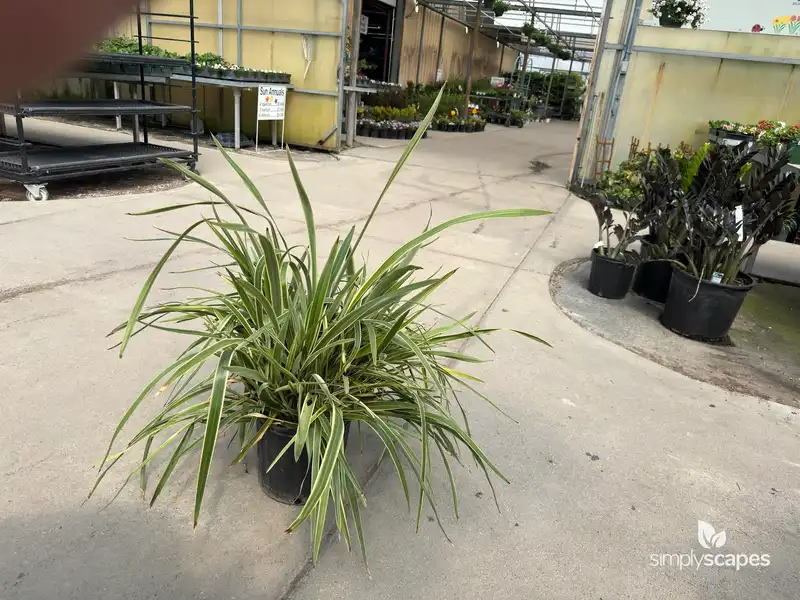
Spider Plant
Chlorophytum comosum
An iconic, air-purifying houseplant with graceful, cascading foliage.
- Plant Type
- House Plants & Tropicals
- Width
- 24-36 In.
- Height
- 12-18 In.
- USDA hardiness zone
- 9 - 11
- Sun requirements
- Part Shade, Full Shade
- Design image count
- 13
Design images (13)


Bring your vision to life
The design images above are drag-and-drop ready — place this plant on a photo of your own yard and see it before you plant it.
Create design onlineAbout Spider Plant
Spider plant is a clump-forming South African perennial grown mainly as an indoor foliage plant. It has narrow leaves, arching flower stems, and small white flowers followed by plantlets that root readily. North Carolina Extension lists a typical foliage clump at 12–18 inches tall and 12–24 inches wide, while FAO’s species profile records 25–35 cm height and 60–90 cm width; the catalog’s 0.8 m width falls within the latter range. [North Carolina Extension](https://plants.ces.ncsu.edu/plants/chlorophytum-comosum/) · [FAO Ecocrop](https://ecocrop.apps.fao.org/ecocrop/srv/en/cropView?id=34722)
## Placement and Growing Conditions
Grow spider plant in medium to bright indirect light indoors, using general-purpose potting soil or a soilless mix. It tolerates average household humidity and temperatures, and works in hanging baskets where its long stems can cascade. FAO notes that plants in baskets may trail 60–90 cm. Outdoor use is region-dependent: FAO describes groundcover use in frost-free climates, but UF/IFAS no longer recommends spider plant in Florida because it is predicted to become invasive in natural areas. Keep plantlets contained and avoid planting where they could escape into nearby natural areas.
## Water and Propagation
Water thoroughly, then let the soil dry slightly before watering again. Thick roots and rhizomes store water, so the plant can handle occasional inconsistent watering, but persistently soggy soil can cause root rot. After flowering, plantlets form at the ends of wiry stems. Root a plantlet in moist propagation mix while it remains attached to the mother plant, then sever the stem once roots form; larger clumps can also be divided.
## Maintenance
Repot when fleshy roots crowd the container, often every year or two after the first year of growth. Feed lightly because excess fertilizer can reduce plantlet production and contribute to brown leaf tips. Trim damaged leaves at their base, and use rainwater or distilled water if tap-water salts or chemicals are causing tip browning.