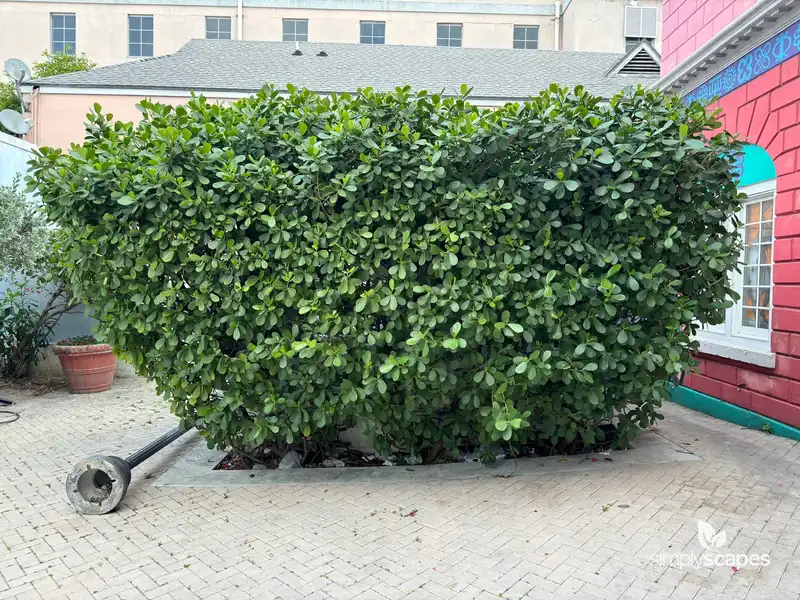
Autograph tree
Clusia rosea
A unique tropical evergreen with leaves you can actually write on.
- Plant Type
- Flowering Trees
- Width
- 15-25 Ft.
- Height
- 25-30 Ft.
- USDA hardiness zone
- 10 - 11
- Sun requirements
- Full Sun, Part Shade
- Design image count
- 13
Design images (13)


Bring your vision to life
The design images above are drag-and-drop ready — place this plant on a photo of your own yard and see it before you plant it.
Create design onlineAbout Autograph tree
Autograph tree (Clusia rosea) is an evergreen subtropical tree with thick, rounded leaves and showy pink-and-white flowers. It can grow 25–30 feet tall and 15–25 feet wide, so give it room as a specimen or use pruning to maintain a screen.
## Flowers and landscape use
The [UF/IFAS species profile](https://ask.ifas.ufl.edu/publication/ST172) describes summer flowers that may appear year-round, evergreen foliage, and fruit that attracts birds. It recommends the plant for screening and notes that it tolerates salt spray and drought. The [UF/IFAS Hillsborough Extension](https://blogs.ifas.ufl.edu/hillsboroughco/2021/12/31/clusia-a-hugely-popular-landscape-plant/) cautions that keeping it as a short hedge requires frequent pruning.
## Siting
Grow in full sun to partial shade in well-drained clay, sand, or loam; the species profile lists acidic and alkaline soils as tolerated. It is suited to coastal settings and USDA zones 10B–11. Established plants tolerate dry periods, but water newly planted trees until established.
## Maintenance
Allow adequate room for the spreading crown. Prune to establish strong structure and remove aerial or prop roots as they form; a clipped short hedge needs frequent trimming. Fallen fruit and thick leaves can create litter, while the fruit’s red seeds provide food for birds.