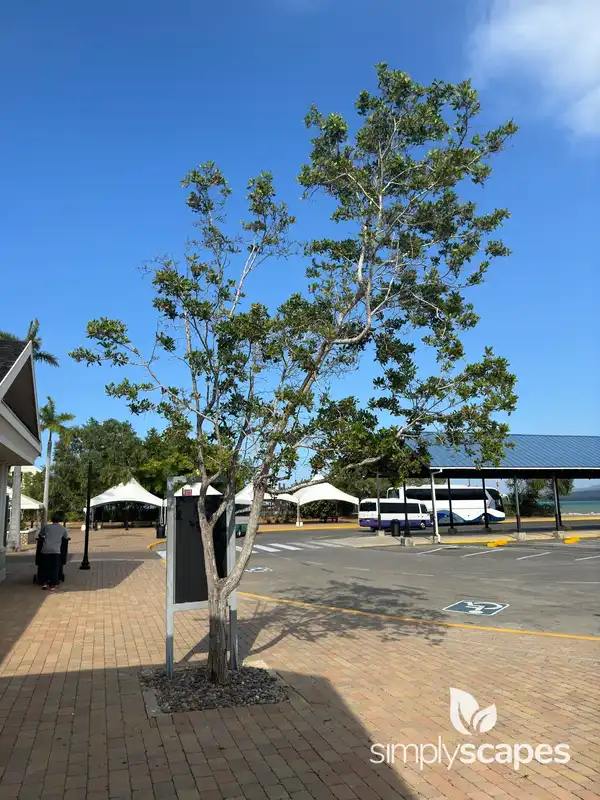
Buttonwood
Conocarpus erectus
A hardy, salt-tolerant native tree perfect for coastal landscapes.
- Plant Type
- Shade Trees
- Width
- 20-30 Ft.
- Height
- 30-45 Ft.
- USDA hardiness zone
- 10 - 11
- Sun requirements
- Full Sun, Part Shade
- Design image count
- 8
Design images (8)


Bring your vision to life
The design images above are drag-and-drop ready — place this plant on a photo of your own yard and see it before you plant it.
Create design onlineAbout Buttonwood
Buttonwood is a durable evergreen tree native to Florida, the Caribbean, and parts of South America. Its multi-trunked form, small green leaves, spring-to-fall flowers, and rounded fruits give it year-round structure in warm coastal landscapes.
## Form and placement
[UF/IFAS Extension](https://ask.ifas.ufl.edu/publication/ST179) describes *Conocarpus erectus* as a 30–45-foot tree with a 20–30-foot spread, a spreading or vase-shaped crown, and moderate growth. It is used as a specimen, hedge, screen, or patio and street tree. Full sun is preferred, and UF/IFAS lists USDA zones 10B–11. The small green flowers are inconspicuous; the red-brown cone-like fruits can remain attractive through the year.
## Coastal growing
Buttonwood tolerates full sun, sandy soils, salt spray, brackish conditions, and periods of wet soil. UF/IFAS notes that exposed coastal winds can shape the crown into a picturesque form, while inland trees may need attention to sooty mold. Choose a site with room for a broad crown and avoid crowding structures.
## Maintenance
Prune to establish a strong structure, especially when training a young tree for a single trunk or clipped hedge. Monitor inland foliage for sooty mold and maintain room around the mature canopy. See the [UF/IFAS Buttonwood profile](https://ask.ifas.ufl.edu/publication/ST179) for regional planting guidance.