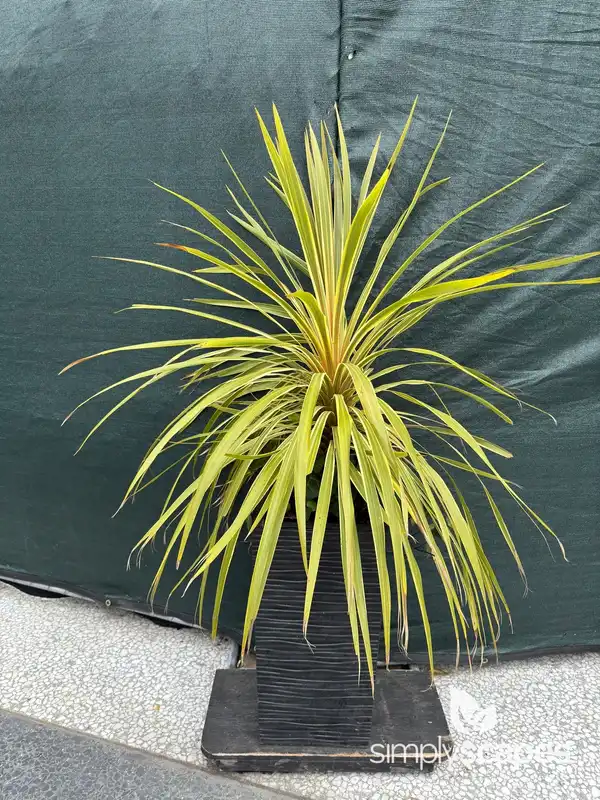
False Dracena - Cabbage Tree
Cordyline australis
An iconic, architectural palm-like tree with dramatic sword-shaped leaves.
- Plant Type
- House Plants & Tropicals
- Width
- 8-12 Ft.
- Height
- 20-30 Ft.
- USDA hardiness zone
- 9 - 11
- Sun requirements
- Full Sun, Part Shade
- Design image count
- 6
Design images (6)


Bring your vision to life
The design images above are drag-and-drop ready — place this plant on a photo of your own yard and see it before you plant it.
Create design onlineAbout False Dracena - Cabbage Tree
Cordyline australis is an evergreen New Zealand tree with a strong, palm-like outline and long, sword-shaped leaves. As it matures, it may form several branches topped by dense leaf clusters and produce tall panicles of fragrant, cream-colored flowers.
## Form and placement
The [Royal Horticultural Society species profile](https://www.rhs.org.uk/plants/4361/cordyline-australis/details) gives a broad mature range of about 4–8 metres tall and 2.5–4 metres wide, reflecting variation with climate and growing conditions. It suits a sunny or partly shaded position as a specimen or architectural focal point. The RHS recommends well-drained soil and notes that established plants can tolerate drought.
## Seasonal interest
Flower panicles appear on mature plants, generally above the foliage. Leaves are evergreen, so the plant keeps its architectural form through the year. The [RHS growing guide](https://www.rhs.org.uk/plants/cordyline/growing-guide) notes that cordylines can need protection in colder conditions; local exposure and cultivar affect winter performance.
## Maintenance
Choose a site with enough room for the mature trunk and crown. Avoid waterlogged soil, remove dead leaves when they become untidy, and protect young plants where winter cold is a concern.
## New Zealand — FENZ Low/moderate flammability
The [Fire and Emergency New Zealand plant directory](https://www.checkitsalright.nz/reduce-your-risk/low-flammability-plants) lists Cordyline australis / Cabbage tree, tī, tī kōuka in its Low/moderate flammability band (source entry 128). The entry is in the main plant directory, which includes the full range of flammability bands; presence there alone is not a planting recommendation.
This matches the printed unselected botanical identity. The source does not establish separate testing of every cultivar or regional form. Its bands describe flammability: higher means more flammable, unlike the numerical Idaho resistance scale. Plant condition, site and maintenance affect performance. Keep plants appropriately watered, remove dry material and maintain breaks in vegetation; low flammability is not fireproof. Keep other regional classifications separate.