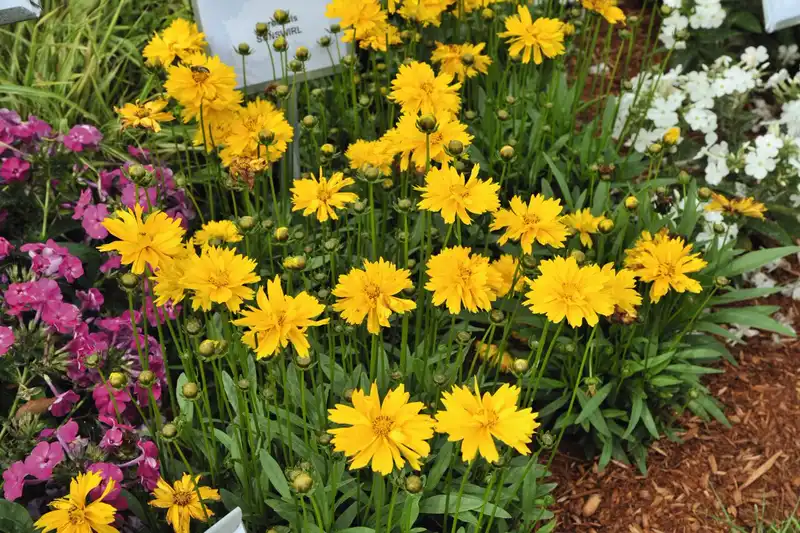
Tickseed
Coreopsis
Cheerful, sun-loving tickseed for vibrant, low-maintenance summer borders.
- Plant Type
- Perennials & Annuals
- Width
- 12-18 In
- Height
- 12-18 In
- USDA hardiness zone
- 3 - 10
- Sun requirements
- Full Sun
- Design image count
- 4
Design images (4)


Bring your vision to life
The design images above are drag-and-drop ready — place this plant on a photo of your own yard and see it before you plant it.
Create design onlineAbout Tickseed
Coreopsis is an accepted genus in the daisy family, Asteraceae, and its plants are commonly called tickseeds for the shape of their seeds. Kew recognizes 39 accepted species in the genus. [Missouri Botanical Garden’s Coreopsis profile](https://www.missouribotanicalgarden.org/PlantFinder/PlantFinderDetails.aspx?cv=&isprofile=0&taxonid=269826) notes that hardiness and longevity among hybrid coreopsis depend greatly on parentage, while [NC State Extension](https://plants.ces.ncsu.edu/plants/coreopsis-palustris/common-name/swamp-tickseed/) describes a species from moist swamp edges and wet pine savannas.
## Flowers and garden role
Many garden coreopsis selections carry bright daisy-like flowers, often in yellow tones, but the genus also includes a range of flower colors, forms, heights, and bloom seasons. Use a named species or cultivar when planning a specific color combination, mature size, or hardiness level.
## Growing conditions
Sun, soil moisture, spread, and winter hardiness vary across the genus. Some selections prefer dry, well-drained ground, while swamp tickseed tolerates moist soil and flooding. The broad genus record’s existing size and zone values are retained as generalized catalog data rather than treated as universal species limits.
## Maintenance
Follow the care guidance for the selected species or cultivar. Some clumping garden forms benefit from shearing after their main flowering period; divide clumps when they become crowded if the individual selection responds well to division.