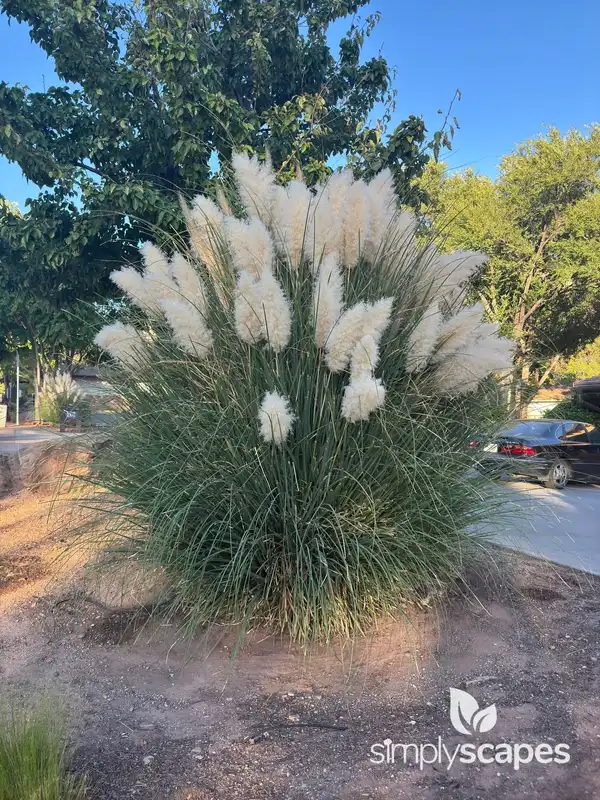
Pampas Grass
Cortaderia selloana
A dramatic, towering ornamental grass with iconic feathery plumes.
- Plant Type
- Ornamental Grasses
- Width
- 6-10 Ft.
- Height
- 6-10 Ft.
- USDA hardiness zone
- 7 - 10
- Sun requirements
- Full Sun, Part Shade
Bring your vision to life
The design images above are drag-and-drop ready — place this plant on a photo of your own yard and see it before you plant it.
Create design onlineAbout Pampas Grass
Pampas grass is a large, clump-forming perennial grass with a strong architectural presence. Its long, arching leaves form a broad fountain, while late-summer flower plumes rise above the foliage; mature size and plume fullness vary with climate and whether the plant is male or female. [UGA Extension](https://fieldreport.caes.uga.edu/publications/C983/pampas-grass/), [University of Florida IFAS Extension](https://hort.ifas.ufl.edu/shrubs/corsela.pdf), and [NC State Extension](https://plants.ces.ncsu.edu/plants/cortaderia-selloana/) describe its form, performance, and garden requirements.
## Form and use
UGA Extension reports plants reaching about 10 feet tall and 6 feet wide, while UF/IFAS describes 8–10 feet in both height and width. These regional references document the variation within the species. Both sources describe silvery-white plumes several feet above the foliage. Female plants have broader, fuller plumes; plants propagated from seed may vary in sex and appearance. Use the grass as a focal point or background planting with ample clearance from buildings and paths. Its sharp leaf edges and dry old foliage require thoughtful placement.
## Growing conditions
Full sun and well-drained soil support the best growth and flowering. Once established, pampas grass is drought tolerant and tolerates salt spray. UGA describes it as hardy in zone 8 and marginal in zones 6 and 7; NC State lists a wider species range of USDA zones 6a–10b. Hardiness reports vary by region, so select a source appropriate to the local climate.
## Maintenance
Cut back the previous season’s foliage close to the ground in late winter before new growth begins. Wear long sleeves and gloves because the leaf margins are sharp. Established plants need little routine care; remove plumes before they shed seed where naturalizing is a concern.