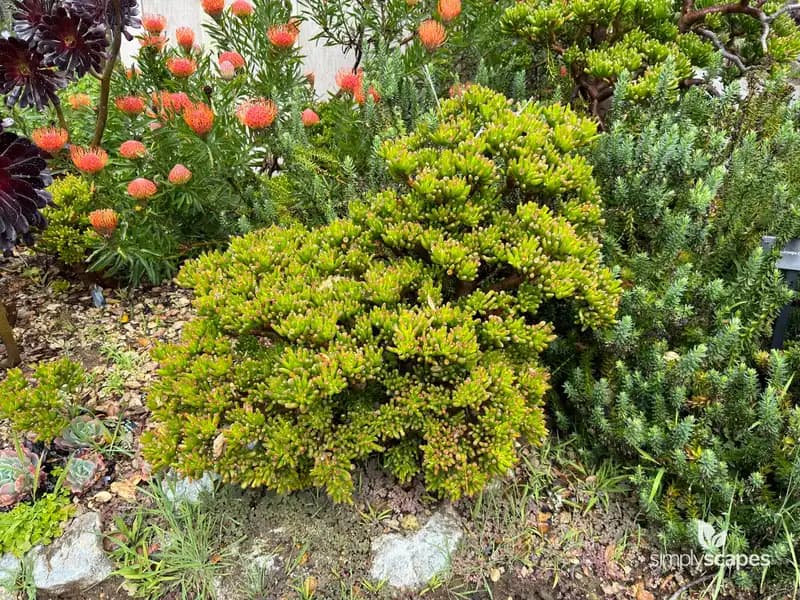
Jade Plant
Crassula ovata
A timeless, easy-care succulent tree for home and garden.
- Plant Type
- Succulents
- Width
- 3-5 Ft.
- Height
- 5-8 Ft.
- USDA hardiness zone
- 10 - 11
- Sun requirements
- Full Sun, Part Shade
- Design image count
- 19
Design images (19)


Bring your vision to life
The design images above are drag-and-drop ready — place this plant on a photo of your own yard and see it before you plant it.
Create design onlineAbout Jade Plant
Jade plant is the common name for Crassula ovata, an evergreen succulent shrub often kept as a houseplant. Its fleshy leaves and water-storing stems suit container culture, while good drainage and careful watering help prevent root problems. [University of Wisconsin–Madison Extension](https://hort.extension.wisc.edu/articles/jade-plant-crassula-ovata/) · [Clemson Cooperative Extension](https://hgic.clemson.edu/factsheet/jade-plant/)
## Appearance and use
Crassula ovata has glossy, rounded green leaves on thickening stems and can develop a small tree-like form over time. In native conditions it can reach about 6 feet; indoor size depends on age, light, pruning, and container conditions, so use the current plant's established approximate dimensions for planning. Bright light may bring red edging to the leaves. Jade is slow-growing, tolerates restricted root space, and works well as a long-lived container specimen. Existing common-name aliases are retained because this species is also called friendship plant, money plant, or money tree. [Wisconsin Horticulture](https://hort.extension.wisc.edu/articles/jade-plant-crassula-ovata/) · [Clemson HGIC](https://hgic.clemson.edu/factsheet/jade-plant/)
## Maintenance
Give it full sun or bright filtered light; Clemson recommends at least four hours of direct light daily. Use a very well-drained succulent mix and a pot with drainage. During active spring and summer growth, keep the mix lightly moist without letting it become wet; in winter, let it dry between waterings. Avoid extremes of prolonged drought and overwatering, both of which can cause leaf loss or decline. Protect the plant from cold drafts and frost. Repot only when needed, preferably as new growth begins, and stabilize an older top-heavy specimen in a heavier pot. Stem cuttings can be used for propagation. Recommendations from Clemson are written for South Carolina conditions, so adjust seasonal care to local conditions.