Minerature Jade Plant
Crassula ovata 'Hobbit'
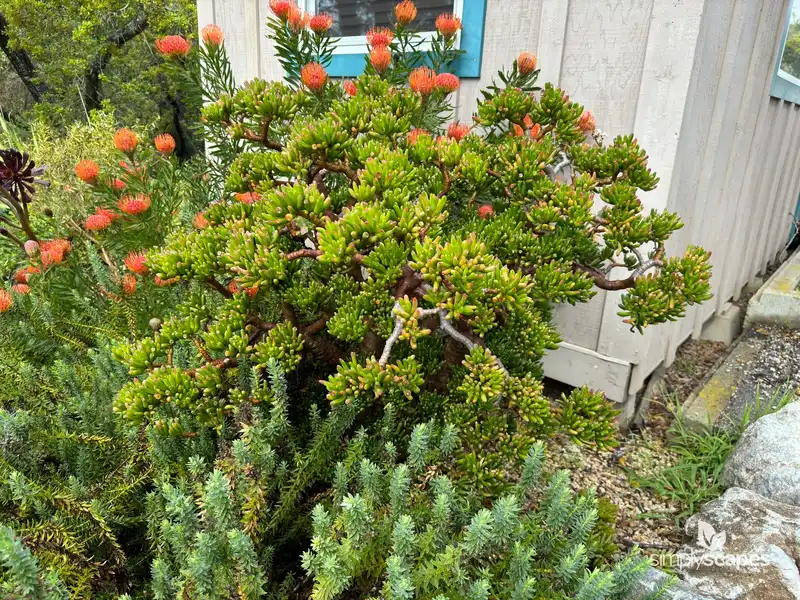
A whimsical succulent with unique curled leaves and red-tipped edges.
- Plant Type
- House Plants & Tropicals
- Width
- 12-24 In.
- Height
- 24-36 In.
- USDA hardiness zone
- 10 - 11
- Sun requirements
- Full Sun, Part Shade
- Design image count
- 2
Design images (2)


Bring your vision to life
The design images above are drag-and-drop ready — place this plant on a photo of your own yard and see it before you plant it.
Create design onlineAbout Minerature Jade Plant
This plant is the named jade selection Crassula ovata 'Hobbit'; its existing display name, aliases, and attached imagery are retained. Clemson Extension identifies Hobbit as a slow-growing jade with tubular, pipe-shaped leaves and reddish tips. [Clemson Cooperative Extension](https://hgic.clemson.edu/factsheet/jade-plant/) · [University of Wisconsin–Madison Extension](https://hort.extension.wisc.edu/articles/jade-plant-crassula-ovata/)
## Appearance and use
Hobbit is a sculptural succulent for a bright indoor position or a protected container display. Its fleshy leaves store water, and its compact, slow growth suits long-term pot culture. Clemson describes this selection as reaching about 3 feet, while the current plant record gives smaller approximate dimensions; actual size varies with age, pruning, light, and container conditions. Keep those current approximate dimensions as a planning guide rather than a promise of mature maximum size. The general jade plant's mature stems and small star-shaped flowers are species-level traits, not a guarantee of flowering for every indoor specimen. [Clemson HGIC](https://hgic.clemson.edu/factsheet/jade-plant/) · [Wisconsin Horticulture](https://hort.extension.wisc.edu/articles/jade-plant-crassula-ovata/)
## Maintenance
Provide full sun or bright filtered light; Clemson recommends at least four hours of direct sunlight for jade plants. Plant in a free-draining succulent mix and use a pot with a drainage hole. During spring and summer, keep the soil moist but never wet; in winter, let it dry between waterings. Do not leave the pot standing in water, and avoid extreme drought that can cause leaf spotting, shriveling, or leaf drop. Protect foliage from cold drafts and frost. Repot only if needed, as new growth begins, and use a stable pot if the mature plant becomes top-heavy. Clemson's recommendations are written for South Carolina conditions, so adapt watering and light to your local indoor environment.