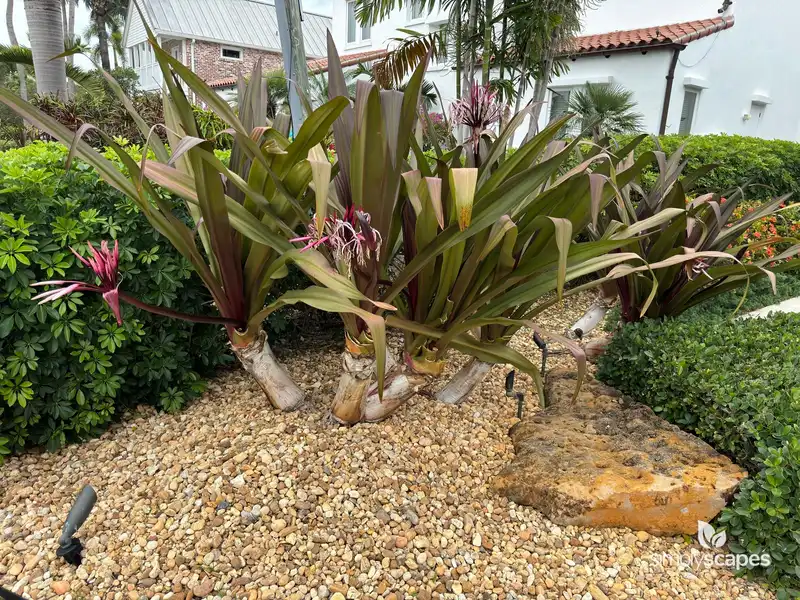
Giant spider lily
Crinum × amabile
A massive, fragrant tropical lily with stunning night-blooming flowers.
- Plant Type
- Perennials & Annuals
- Width
- 3-5 Ft.
- Height
- 3-5 Ft.
- USDA hardiness zone
- 8 - 11
- Sun requirements
- Full Sun, Part Shade
- Design image count
- 2
Design images (2)


Bring your vision to life
The design images above are drag-and-drop ready — place this plant on a photo of your own yard and see it before you plant it.
Create design onlineAbout Giant spider lily
Giant spider lily is a bulbous evergreen perennial with bold, strap-shaped leaves and fragrant red to pink flowers held above the foliage. It suits warm gardens where the soil stays moderately moist and the plant has room to form a substantial clump.
## Foliage and flowers
The University of Florida IFAS profile describes plants about 3–5 feet tall and wide, with glossy leaves that may be greenish red and fragrant flowers appearing through spring, summer, and fall. This exact-source height range conflicts with the existing 3–10-foot label, so the display range is narrowed while the numeric garden height remains unresolved rather than replaced with an unsupported point. The established width remains within the same published 3–5-foot range. IFAS lists the plant for USDA Zones 8B–11, sun to partial shade, and moderately moist, well-drained soil; it also reports moderate salt-spray tolerance and use near pools and water features.
Kew treats the plant as the hybrid Crinum × amabile and records its parentage, while the Royal Horticultural Society lists Crinum amabile and Amaryllidaceae. View the [IFAS landscape profile](https://ask.ifas.ufl.edu/publication/FP156), [Kew Plants of the World Online](https://powo.science.kew.org/taxon/urn:lsid:ipni.org:names:63772-1/general-information), and [RHS profile](https://www.rhs.org.uk/plants/4793/crinum-amabile/details).
## Maintenance
Plant bulbs in well-drained soil and water consistently during establishment. Remove spent flower stalks and damaged foliage when needed, keeping the healthy evergreen leaves in place to support the bulb.