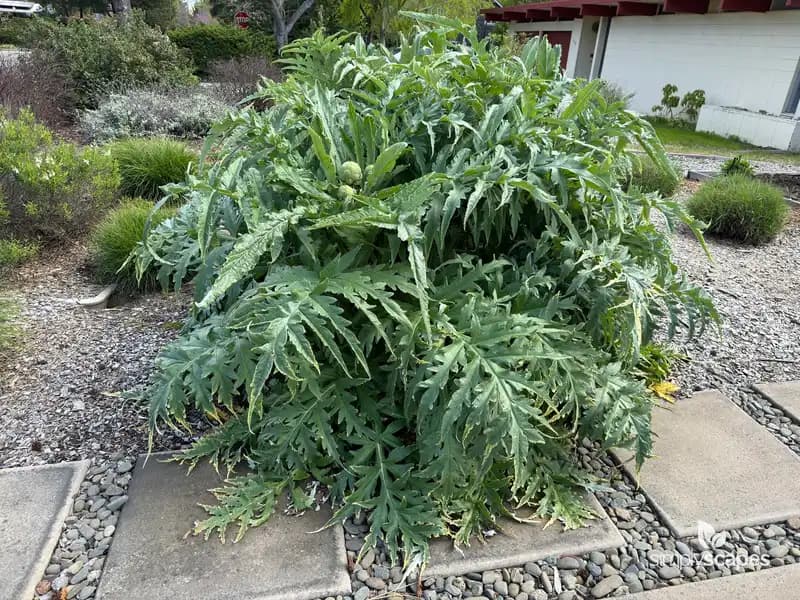
Cardoon
Cynara cardunculus
A dramatic, silver-foliaged Mediterranean thistle with edible stalks and purple blooms.
- Plant Type
- Perennials & Annuals
- Width
- 24-36 In.
- Height
- 3-6 Ft.
- USDA hardiness zone
- 7 - 10
- Sun requirements
- Full Sun
- Design image count
- 1
Design images (1)

Bring your vision to life
The design images above are drag-and-drop ready — place this plant on a photo of your own yard and see it before you plant it.
Create design onlineAbout Cardoon
Cardoon (Cynara cardunculus) is a Mediterranean thistle grown for its architectural, deeply cut, gray-green foliage and tall purple flower stalks. It is a perennial in mild climates, though it is often grown as a half-hardy annual; NC State lists a mature height of 3–6 feet and a spread of 2–3 feet ([NC State Extension](https://plants.ces.ncsu.edu/plants/cynara-cardunculus/common-name/cardoon/)).
## Site and Growth
Plant cardoon in full sun and moist, well-drained soil. Its large, prickly leaves need room to spread, and plants may die back in winter before resprouting from a deep taproot. In hot summers, it may become dormant.
## Edible Stalks
The young leaf stalks can be blanched, harvested, cooked, and eaten as a vegetable. Wear gloves when handling spiny stems; smooth-stemmed cultivars are available, but the exact cultivar should be confirmed before assuming a plant is spineless.
## Maintenance
Trim older leaves when they lose their upright form. Mulch heavily where winter cold threatens survival, and remove unwanted root growth carefully because the deep taproot can resprout. NC State reports that cardoon is invasive in North Carolina and can form colonies in parts of California, so check local guidance before planting near natural areas.