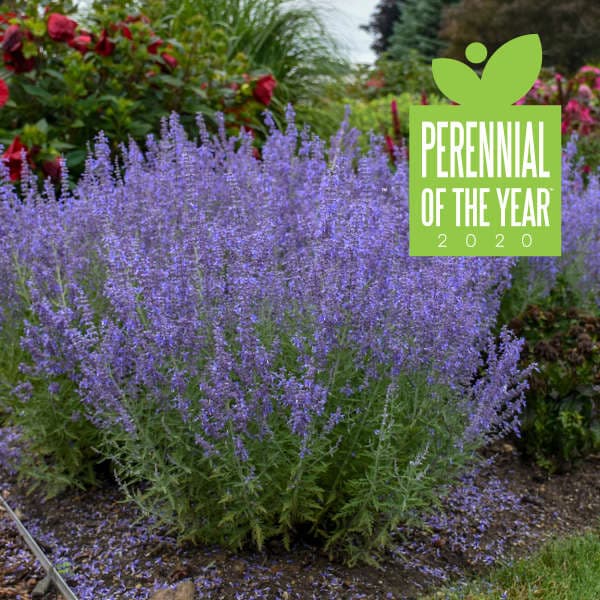
Denim 'n Lace Russian Sage
Perovskia atriplicifolia 'Denim 'n Lace' USPP28445, Can PP5568
Lacy sky-blue flowers on strong, upright stems for sun-drenched gardens.
- Plant Type
- Perennials & Annuals
- Width
- 2.83–3.17 Ft.
- Height
- 28–32 In.
- USDA hardiness zone
- 4 - 9
- Sun requirements
- Full Sun
- Water requirements
- Low
- Plant developer
- Proven Winners
- Design image count
- 4
Design images (4)


Bring your vision to life
The design images above are drag-and-drop ready — place this plant on a photo of your own yard and see it before you plant it.
Create design onlineAbout Denim 'n Lace Russian Sage
Denim ’n Lace is an upright Russian sage selection with lacy, sky-blue flowers held on amethyst-purple calyxes. The [Proven Winners plant page](https://www.provenwinners.com/plants/perovskia/denim-n-lace-russian-sage-perovskia-atriplicifolia) lists mature dimensions of 28–32 inches tall and 34–38 inches wide, full sun, and flowering in spring and summer. Its strong stems support the upright form, and the page highlights drought tolerance, fragrant flowers and foliage, hummingbirds, and deer resistance; it identifies the selection by USPP28445 and Canadian PP5568.
## Landscape Use
Use Denim ’n Lace in a sunny border, a dry garden, or a mixed perennial planting where its blue flowers and silver foliage can soften neighboring colors. Its upright habit gives a planting vertical structure while the purple calyxes continue to add color around the flowers.
## Growing Conditions
Provide full sun and well-drained soil. The Proven Winners page lists USDA zones 4–9 and recommends the plant for hot, dry areas. Water during establishment, then reduce irrigation as the plant becomes established.
## Maintenance
Give the mature plant room to spread about three feet. Prune old stems in early spring before new growth emerges. Avoid poorly drained sites and excessive irrigation.