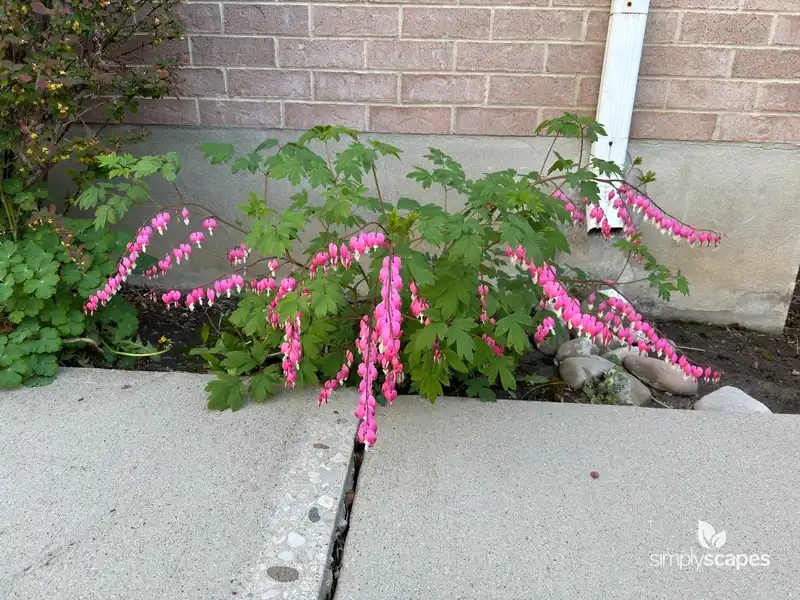
Bleeding Hearts
Dicentra
Elegant heart-shaped blooms and lacy foliage for your shady woodland retreat.
- Plant Type
- Perennials & Annuals
- Width
- 18–36 In.
- Height
- 24–36 In.
- USDA hardiness zone
- 3 - 9
- Sun requirements
- Part Shade, Full Shade
- Water requirements
- Moist
- Design image count
- 2
Design images (2)


Bring your vision to life
The design images above are drag-and-drop ready — place this plant on a photo of your own yard and see it before you plant it.
Create design onlineAbout Bleeding Hearts
The genus Dicentra includes annuals and perennials; its rhizomatous or tuberous perennial forms have divided foliage and pendent, heart-shaped flowers, often carried in arching clusters. Flowering time and mature size vary among species, so choose a form that suits the garden. [Royal Horticultural Society](https://www.rhs.org.uk/plants/20328/dicentra/details) [NC State Extension](https://plants.ces.ncsu.edu/plants/dicentra/common-name/bleeding-heart/)
## Landscape Use
Place bleeding hearts in the front of a woodland border, beside a shaded path, or in an understory planting where the flowers can be seen close up. North Carolina State Extension describes the genus as typically around one foot tall and wide, and recommends partial to full shade with rich, moist, well-drained soil. Individual species can differ from that broad size estimate. [NC State Extension](https://plants.ces.ncsu.edu/plants/dicentra/common-name/bleeding-heart/)
## Growing Conditions
Provide regular moisture while plants are active and avoid sites that remain waterlogged. In hot or dry gardens, shade and organic matter help maintain cooler, more even soil conditions. Bloom timing and hardiness depend on which Dicentra species is grown.
## Maintenance
Water during dry spells and remove spent stems as needed, leaving healthy foliage until it fades naturally. All parts are considered poisonous, so keep plant material away from children and pets. [NC State Extension](https://plants.ces.ncsu.edu/plants/dicentra/common-name/bleeding-heart/)