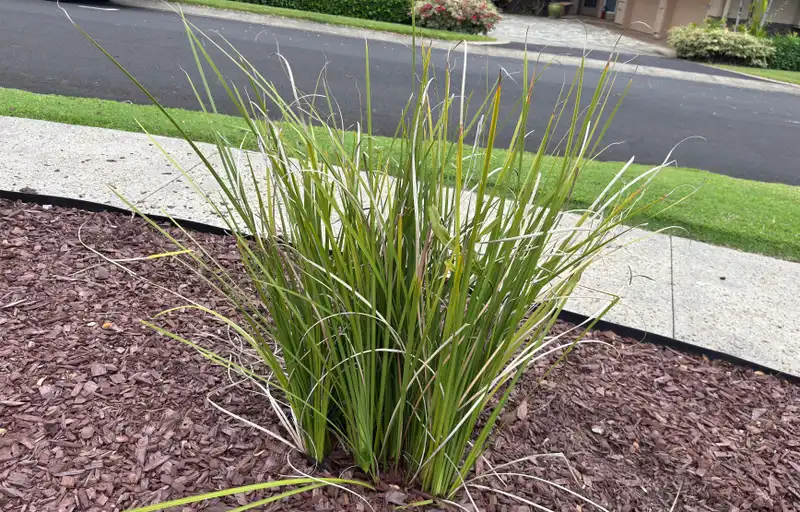
Yellow Wild Iris
Dietes bicolor
- Plant Type
- Perennials & Annuals
- Width
- 24-36 In.
- Height
- 2-4 Ft.
- USDA hardiness zone
- 8 - 11
- Sun requirements
- Full Sun, Part Shade
- Water requirements
- High
- Design image count
- 1
Design images (1)

Bring your vision to life
The design images above are drag-and-drop ready — place this plant on a photo of your own yard and see it before you plant it.
Create design onlineAbout Yellow Wild Iris
Yellow wild iris is an evergreen, rhizomatous perennial with arching strap-like leaves and pale yellow flowers marked by dark brown blotches. It forms large clumps; RHS records flowering in spring and summer, while a South Australian garden selector lists local summer bloom, so timing shifts with region and climate. [Royal Horticultural Society](https://www.rhs.org.uk/plants/31802/dietes-bicolor/details) [Botanic Gardens and State Herbarium of South Australia](https://plantselector.botanicgardens.sa.gov.au/Plants/Details/2963)
## Garden Use
Use this iris in sunny or lightly shaded borders, along paths, or near pond edges where its upright leaves make a strong accent. It grows from underground rhizomes and can spread into substantial clumps. Established plants tolerate dry periods, though regular water during establishment supports steady growth. [Botanic Gardens and State Herbarium of South Australia](https://plantselector.botanicgardens.sa.gov.au/Plants/Details/2963)
## Growing Conditions
Plant in full sun or part shade and use ordinary garden soil with good drainage. The evergreen foliage remains present year-round in suitable climates. In South Australia, the selector describes minimal supplementary watering and moderate frost tolerance; local performance varies with climate.
## Maintenance
Divide large clumps after flowering or in autumn when you want to propagate the plant or control its spread. Check local flowering and autumn timing, since the linked South Australian guidance reflects Southern Hemisphere seasons.