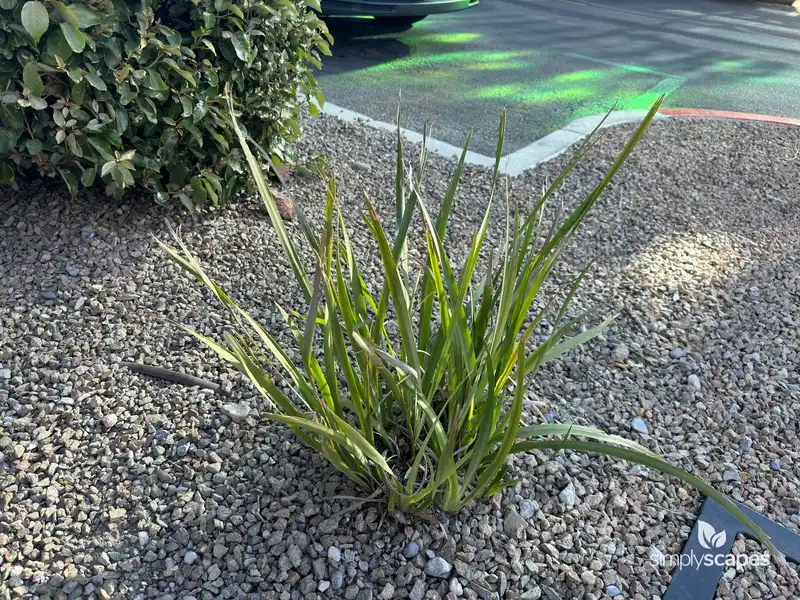
African iris
Dietes grandiflora
Elegant white blooms and sword-like foliage for effortless landscapes.
- Plant Type
- Perennials & Annuals
- Width
- 24-36 In.
- Height
- 3-5 Ft.
- USDA hardiness zone
- 8 - 11
- Sun requirements
- Full Sun, Part Shade
- Design image count
- 6
Design images (6)


Bring your vision to life
The design images above are drag-and-drop ready — place this plant on a photo of your own yard and see it before you plant it.
Create design onlineAbout African iris
African iris is an evergreen, rhizomatous perennial that forms broad clumps of upright, strap-like leaves. Its large white flowers have yellow and violet markings and open in flushes through summer in northern gardens; South Australian guidance records local spring and summer bloom. [Royal Horticultural Society](https://www.rhs.org.uk/plants/5850/dietes-grandiflora/details) [Botanic Gardens and State Herbarium of South Australia](https://plantselector.botanicgardens.sa.gov.au/Plants/Details/3520)
## Garden Use
Use this species in borders, mass plantings, or as a strong foliage accent. It grows about 3–5 feet tall, with a spread commonly described around 2–3 feet, and its flowering stems rise above the leaves. The blooms attract bees and other pollinators. [Botanic Gardens and State Herbarium of South Australia](https://plantselector.botanicgardens.sa.gov.au/Plants/Details/3520)
## Growing Conditions
Plant in full sun or part shade in moist but well-drained soil. It tolerates dry conditions after establishment and generally needs little supplementary water in suitable climates. Allow space for the rhizomes to form a spreading clump.
## Maintenance
Remove spent flower stems if you want a tidier display, and divide large clumps when you want new plants or need to manage spread. Flower timing differs by region; the South Australian selector uses Southern Hemisphere seasons, while the RHS describes summer flowering in the Northern Hemisphere.