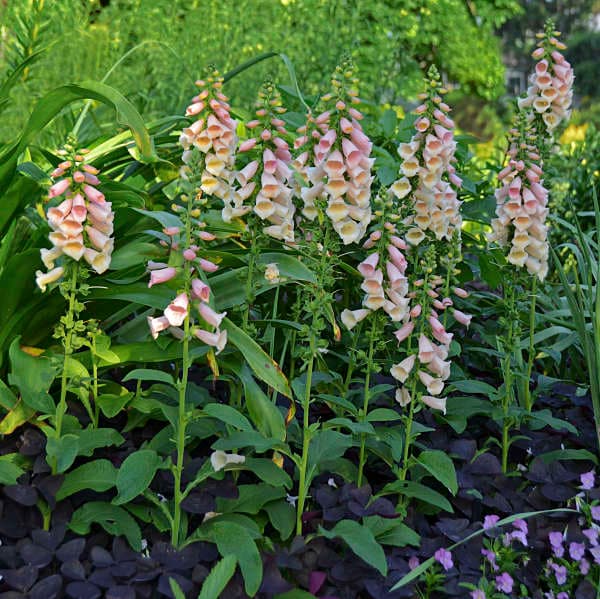
Dalmatian Peach Digitalis
Digitalis purpurea Dalmatian Peach
Elegant peach foxglove with spotted throats, perfect for cottage gardens and pollinators.
- Plant Type
- Perennials & Annuals
- Width
- 12–14 in.
- Height
- 16–20 in.
- USDA hardiness zone
- 5 - 9
- Sun requirements
- Full Sun, Part Shade
- Plant developer
- Ball
- Design image count
- 1
Design images (1)

Bring your vision to life
The design images above are drag-and-drop ready — place this plant on a photo of your own yard and see it before you plant it.
Create design onlineAbout Dalmatian Peach Digitalis
Dalmatian Peach is a compact foxglove selection with peach-colored spikes that bloom in late spring and summer. PanAmerican Seed lists plants at 16–20 inches tall by 12–14 inches wide for zones 5a–9b and notes first-year flowering from seed ([PanAmerican Seed](https://www.panamseed.com/Products/023105668003951/digitalis-dalmatian-peach/); [University of Wisconsin Extension](https://hort.extension.wisc.edu/articles/common-foxglove-digitalis-purpurea/)).
## Landscape Use
The low foliage and upright flower stems suit front-of-border groups, mass plantings, and larger containers. Use this named color selection where a warm peach tone is wanted among perennial flowers. Foxglove blooms attract bees, particularly bumblebees, and hummingbirds; stems are also suitable for cutting. Dalmatian selections are F1 hybrids, so seedlings from saved seed will not reliably match the named color and habit.
## Growing Conditions
The breeder lists sun exposure and a compact 16–20-inch height. The species grows in full sun to light shade and prefers soil that stays moderately moist while draining well. Add organic matter where soil is poor and avoid a site that becomes very dry or waterlogged. The listed spread supports close grouping without crowding.
## Safety
All parts of foxglove are toxic if eaten, and touching the leaves may irritate sensitive skin. Keep plants away from children and pets that may chew them, and wear gloves during handling.
## Maintenance
Remove spent flower spikes after blooming to limit self-sown seedlings, or leave selected stems for volunteers. Water during dry spells and clear away spent stems after flowering. Deer and rabbits generally avoid common foxglove.