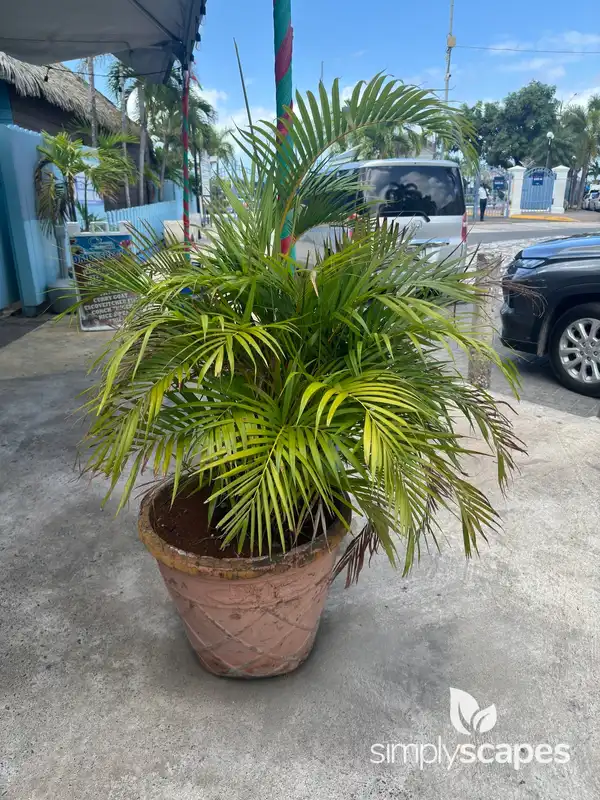
Areca Palm Tree
Chrysalidocarpus lutescens
An elegant, air-purifying palm with golden stems and lush fronds.
- Plant Type
- House Plants & Tropicals
- Width
- 8-15 Ft.
- Height
- 12-30 Ft.
- USDA hardiness zone
- 10 - 11
- Sun requirements
- Full Sun, Part Shade
- Design image count
- 17
Design images (17)


Bring your vision to life
The design images above are drag-and-drop ready — place this plant on a photo of your own yard and see it before you plant it.
Create design onlineAbout Areca Palm Tree
Areca palm is a clustering Madagascar palm with golden, ringed stems and arching, feather-like leaves. In warm climates it brings a light tropical screen to patios and garden beds; in cooler regions it is commonly grown indoors for its upright, multistem form. [North Carolina Extension](https://plants.ces.ncsu.edu/plants/chrysalidocarpus-lutescens/common-name/yellow-palm/) and [Plants of the World Online](https://powo.science.kew.org/taxon/urn:lsid:ipni.org:names:665962-1) give its current accepted name as *Chrysalidocarpus lutescens*, with *Dypsis lutescens* still familiar in older horticultural references.
## Landscape Use
Use the clump as a tropical screen or a specimen where its spread has room. Its yellow-green canes and long pinnate leaves create a soft, layered backdrop, and smaller plants can be kept as container specimens.
## Growing Conditions
Outdoors, grow it in frost-free areas with moist, well-drained soil and full sun to partial shade; it often looks best with protection from the strongest afternoon sun. Indoors, provide bright indirect light, warmth, and higher humidity, watering enough to keep the potting mix lightly moist without leaving roots soggy.
## Seasonal Interest
Small yellow flowers appear in summer on mature outdoor plants, followed by yellow-orange fruits. Flowering and fruiting are uncommon indoors.
## Maintenance
Remove only fully brown, spent fronds and avoid cutting the green crown. Watch indoor plants for scale, whiteflies, and spider mites, and keep the growing medium from drying completely.