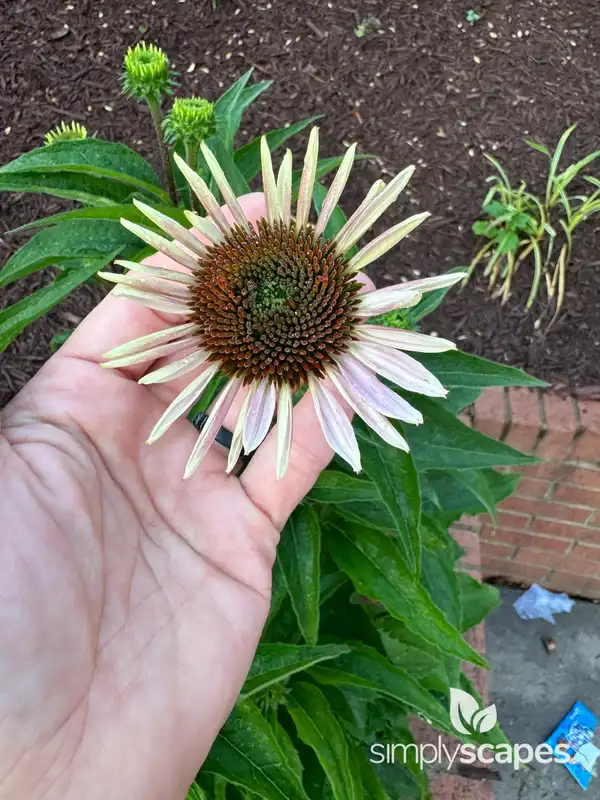
Coneflower
Echinacea
A hardy, pollinator-friendly perennial with iconic spiky centers.
- Plant Type
- Perennials & Annuals
- Width
- 1.5-2.5 Ft.
- Height
- 2-5 Ft.
- USDA hardiness zone
- 3 - 9
- Sun requirements
- Full Sun, Part Shade
- Design image count
- 8
Design images (8)


Bring your vision to life
The design images above are drag-and-drop ready — place this plant on a photo of your own yard and see it before you plant it.
Create design onlineAbout Coneflower
Echinacea is an accepted genus of North American flowering perennials in the daisy family. Its species and hybrids differ in flower color, mature size, bloom timing, and winter hardiness, so use exact species or breeder information for selection-level details.
## Garden character
Plants of the World Online recognizes nine species in the genus and places Echinacea in Asteraceae, with a native range extending from central and southeastern Canada into the United States. [Kew Plants of the World Online](https://powo.science.kew.org/taxon/urn:lsid:ipni.org:names:30035795-2) Echinacea is the principal plant group called coneflowers, but the common name also applies to Rudbeckia and Ratibida. Iowa State describes coneflowers generally as sun-loving plants for dry-to-medium soils that tolerate drought after establishment and attract butterflies; its species accounts show that hardiness, dimensions, and bloom periods differ among plants. [Iowa State University Extension](https://yardandgarden.extension.iastate.edu/how-to/growing-coneflowers-iowa)
## Garden use
Many selections develop upright flower stems above basal foliage, making them useful in mixed borders and pollinator plantings. Choose a species or named cultivar before assigning a mature height, color, climate range, or moisture requirement; a genus entry cannot represent every selection.
## Maintenance
Water new plantings through establishment, then match irrigation and soil moisture to the chosen species. Remove faded stems when you want fewer seedlings; retain some seed heads when winter structure and self-sown seedlings are welcome. Divide crowded clumps when vigor declines, checking the selected plant’s guidance before pruning or dividing a hybrid.