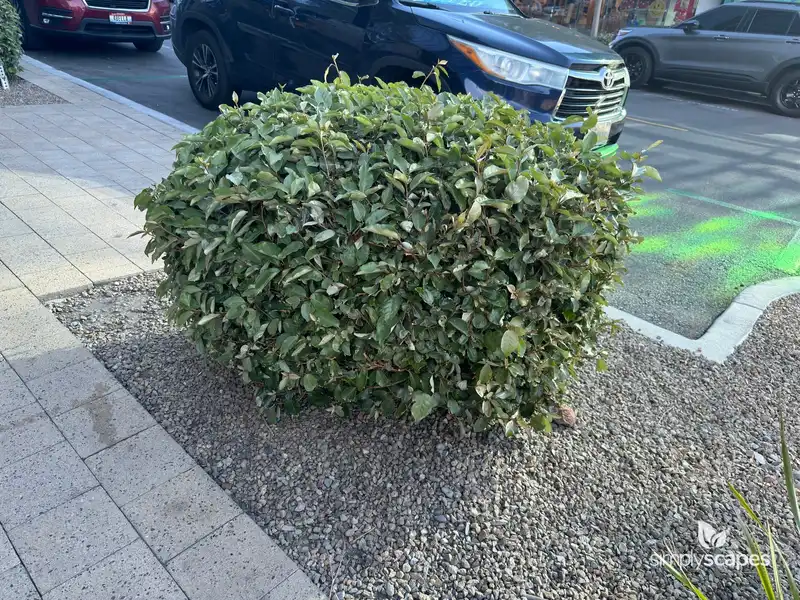
Thorny Olive
Elaeagnus pungens
A tough, fragrant evergreen shrub with striking silvery foliage.
- Plant Type
- Shrubs & Roses
- Width
- 10-15 Ft.
- Height
- 10-15 Ft.
- USDA hardiness zone
- 7 - 9
- Sun requirements
- Full Sun, Part Shade, Full Shade
- Design image count
- 3
Design images (3)


Bring your vision to life
The design images above are drag-and-drop ready — place this plant on a photo of your own yard and see it before you plant it.
Create design onlineAbout Thorny Olive
Thorny olive is a dense, evergreen, multistemmed shrub with glossy green leaves that show silvery scales beneath and sharp, hooked shoots. Small fragrant flowers open in fall, followed by red drupes that birds eat; the plant can spread by seed and vigorous stem sprouts.
## Growing
Grow in sun or part shade; shaded plants are generally less dense. Oregon State University describes a typical garden size of 10–15 feet high with an equal spread, matching the current catalog labels and rounded 3.81-meter dimensions. Thorny olive adapts to many soil types and tolerates drought after establishment, heat, wind, and coastal conditions. Allow space for the long shoots and thorny branches.
## Seasonal interest
Evergreen foliage provides year-round cover, while the small fall flowers contribute fragrance and spring fruits attract birds. Use the plant only where its vigorous, thorny growth can be controlled; it is invasive in some southeastern landscapes.
## Maintenance
Prune to keep shoots from climbing into nearby trees or structures. Because flowers develop on old growth, avoid removing all older stems if flowering matters. Check local invasive-plant guidance before planting. See [Oregon State University’s plant profile](https://landscapeplants.oregonstate.edu/plants/elaeagnus-pungens), [North Carolina Extension’s profile](https://plants.ces.ncsu.edu/plants/elaeagnus-pungens/), and the [USDA Forest Service review](https://research.fs.usda.gov/feis/species-reviews/elapun).