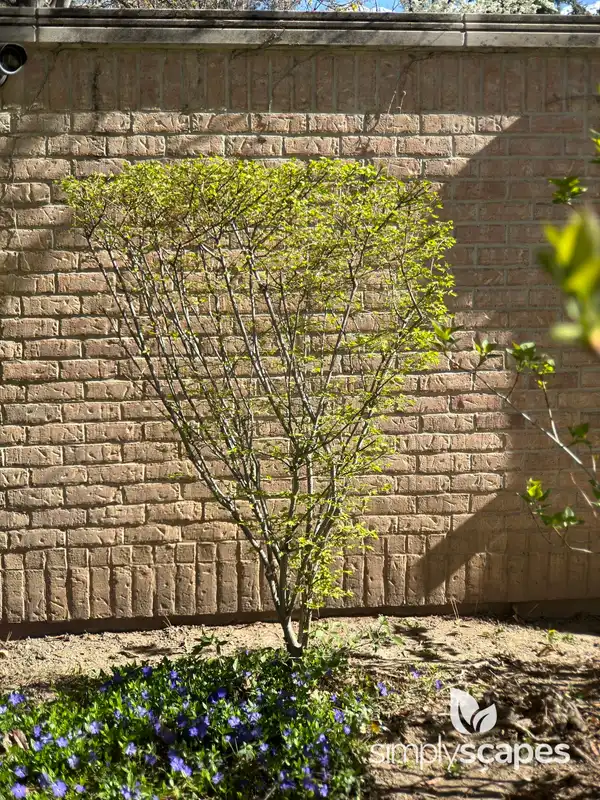
Burning Bush
Euonymus alatus
A vibrant deciduous shrub famous for its fiery red autumn foliage and unique winged stems.
- Plant Type
- Shrubs & Roses
- Width
- 4-8 Ft.
- Height
- 4-8 Ft.
- USDA hardiness zone
- 4 - 8
- Sun requirements
- Full Sun, Part Shade, Full Shade
- Design image count
- 28
Design images (28)


Bring your vision to life
The design images above are drag-and-drop ready — place this plant on a photo of your own yard and see it before you plant it.
Create design onlineAbout Burning Bush
Burning bush, Euonymus alatus, is a deciduous shrub recognized by its vivid fall foliage and the corky ridges on young stems. Its size varies with selection and pruning; University of Maryland Extension reports 5–10 feet as typical for commonly cultivated plants and notes that some reach 20 feet
## Form and seasonal color
The shrub has opposite, finely toothed leaves, small pale green flowers, and reddish-orange fruit that ripens in autumn. Fall color is most vivid in sun and can be more muted in shade. The [University of Maryland Extension profile](https://www.extension.umd.edu/resource/burning-bush) describes its form and seasonal features; the [UConn Extension factsheet](https://ipm.cahnr.uconn.edu/invasive_plants_burning_bush-winged_euonymus/) documents its fruit, corky stems, and spread by seed.
## Siting
Euonymus alatus tolerates a range of light and soil conditions, but it spreads into natural areas in many parts of the United States and can form dense thickets. Check local regulations and invasive-plant guidance before planting; Maryland Extension advises replacing it where possible.
## Maintenance
Monitor seedlings and root suckers and remove them where they appear. Regular trimming can keep a hedge within bounds, but pruning does not prevent birds from dispersing seeds.