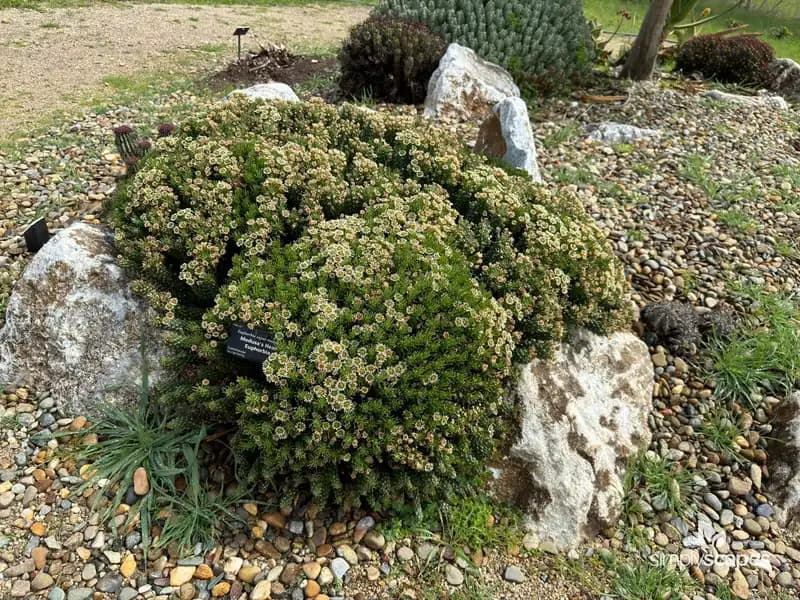
Poinsettia Plant
Euphorbia
A diverse genus of striking, low-maintenance plants with unique forms and vibrant bracts.
- Plant Type
- House Plants & Tropicals
- Width
- 11 In.
- Height
- 14-15 In.
- USDA hardiness zone
- 3 - 11
- Sun requirements
- Full Sun, Part Shade
- Design image count
- 1
Design images (1)

Bring your vision to life
The design images above are drag-and-drop ready — place this plant on a photo of your own yard and see it before you plant it.
Create design onlineAbout Poinsettia Plant
Euphorbia is an exceptionally large genus whose members range from herbs and low perennials to shrubs, trees, and succulents. They occur across many regions and differ widely in their mature size, foliage, flowers, and growing needs, so care depends on the identified species or cultivar rather than on the genus as a whole.
## Forms and garden roles
The genus includes familiar flowering plants as well as architectural foliage plants and ground covers. Some species are grown for colorful bracts or small flowers, while others are valued for unusual stems, evergreen leaves, or drought-adapted forms. Select a named species or cultivar for a specific color, size, hardiness, or landscape use.
## Growing conditions
There is no single sun, soil, water, or hardiness range that applies to all Euphorbia. Match the site to the chosen species: some garden spurges prefer evenly moist soil and shade, while many succulent kinds need strong light and sharply drained soil. Avoid applying one species’ care requirements to the whole genus.
## Maintenance
Follow the care guidance for the exact species or cultivar, and wear gloves when pruning unfamiliar spurges because their milky sap can irritate skin or eyes. [Kew’s Plants of the World Online](https://powo.science.kew.org/taxon/urn:lsid:ipni.org:names:327729-2/general-information) describes Euphorbia as a very large genus with worldwide distribution; its [wood spurge](https://plants.ces.ncsu.edu/plants/euphorbia-amygdaloides-subsp-robbiae/) and [Medusa’s head](https://powo.science.kew.org/taxon/urn:lsid:ipni.org:names:345941-1/general-information) profiles illustrate variation in form and conditions.
## Yavapai County — 2025 source scope and care
The [University of Arizona Yavapai County bulletin](https://extension.arizona.edu/sites/default/files/2025-03/FirewisePlants3-14-2025.pdf), page 2, lists Spurge, Gopher Plant with the botanical cell Euphorbia sp. and form P. It places this entry in its fire-resistant list. The matched catalog name is Euphorbia. The source combines spurge/gopher plant at the Euphorbia genus level with form P. Its association is limited to that garden-perennial context, not every tree, shrub or succulent Euphorbia.
Source form codes: C=groundcover, G=grass, P=perennial, S=shrub, T=tree and V=vine. Printed names and form codes can include source spelling errors or historical taxonomic treatments; the source wording is retained separately from the catalog name and plant-specific habit.
The bulletin states that resistant plants require irrigation and frequent maintenance. It describes low shrubs or clean taller shrubs with little dead material. Maintain suitable moisture and spacing, remove dead growth and avoid continuous fuel; a regional list does not establish every selection's performance or local cold hardiness.
No plant is fireproof. Keep this Yavapai classification separate from Arizona UA, Utah, New Mexico, Idaho, Colorado and other source ratings and their placement, moisture and maintenance conditions.