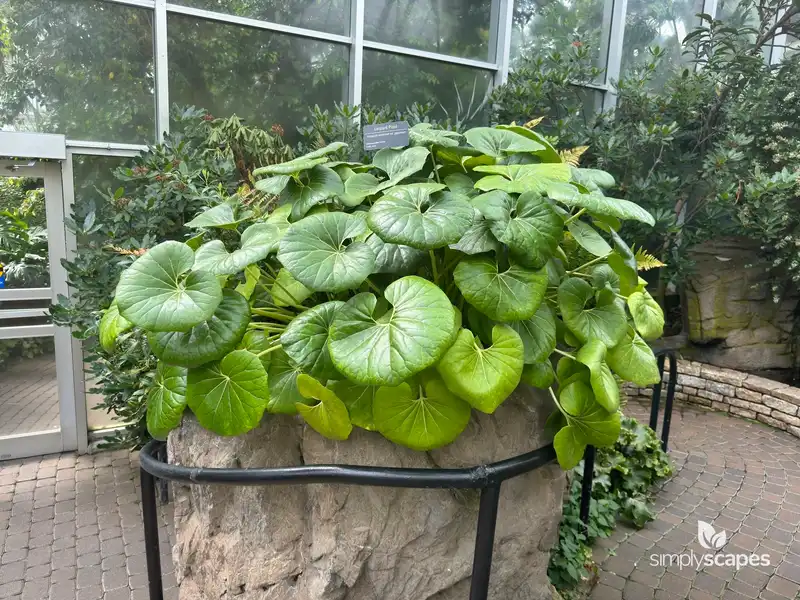
Giant Leopard Plant
Farfugium japonicum 'Giganteum'
Massive, glossy dinner-plate leaves for a bold, tropical statement in shady gardens.
- Plant Type
- Shrubs & Roses
- Width
- 3 Ft.
- Height
- 3-4 Ft.
- USDA hardiness zone
- 7 - 10
- Sun requirements
- Full Shade
- Design image count
- 5
Design images (5)


Bring your vision to life
The design images above are drag-and-drop ready — place this plant on a photo of your own yard and see it before you plant it.
Create design onlineAbout Giant Leopard Plant
Giant leopard plant (Farfugium japonicum ‘Giganteum’) is an evergreen, clump-forming perennial valued for very large, glossy, rounded leaves. The bold foliage brings a tropical look to a shaded garden, and yellow daisy-like flowers rise above it in fall and winter.
## Size and Placement
Allow roughly 2–3 feet of height and spread, with individual leaves more than a foot across. Use it as a specimen near a path, in a sheltered woodland border, or in a large container where the foliage can be appreciated up close.
## Light and Moisture
Give it partial shade and steady moisture. The Royal Horticultural Society lists moist but well-drained or poorly drained soils and a sheltered position; UF/IFAS also recommends irrigation and partial shade. Protect the leaves from hot afternoon sun and keep the root zone from drying during warm weather.
## Seasonal Interest
The evergreen leaves provide year-round structure. Loose clusters of yellow, daisy-like flowers appear in autumn and winter. The RHS profile records ‘Giganteum’ as a synonym of the botanical variety giganteum and describes leaves exceeding 30 cm across. [Royal Horticultural Society](https://www.rhs.org.uk/plants/22728/farfugium-japonicum-var-giganteum/details) · [UF/IFAS](https://gardeningsolutions.ifas.ufl.edu/plants/ornamentals/farfugium/)
## Maintenance
Remove damaged leaves at their base as needed. Divide crowded clumps in spring; water container plants regularly and shelter them from drying winds.